
- Exchange and wallet links: the app must connect to all your accounts for a full view.
- Asset support: it should know small altcoins, NFTs, or ICO tokens if you hold them.
- Security and privacy: look for API encryption, two-factor auth, and read-only access.
- User-friendly interface: you want to find stuff fast without a clunky menu.
- Tax and report tools: built-in gain calc and forms save time at filing.
- Price: many use free tiers, but paid plans add features, so check cost.
How to Build a Cryptocurrency Tracker App That Actually Keeps Your Digital Wallet in Check - Clarity Over Chaos
19 September, 2026
0 comments
What a Cryptocurrency Tracker App Does
A cryptocurrency tracker app is a dead-simple tool that yanks your digital coins and tokens into one screen. I use one to see real-time prices, alerts, and my total portfolio value without hopping between tabs like a jackass. The app links to exchanges and wallets so it can serve up charts, news, and transaction history in a single dashboard. If you’ve ever wondered what crypto is really for , it’s mostly moving and holding value, and this crypto software makes watching that easier. Instead of a messy spreadsheet, you get a clear picture of your holdings at a glance. Some folks hunt for the best site to do the same, but owning your own app feels better. The point is clarity: you see what you own and how it moves, without the tab clutter that drives me nuts. Most trackers pull from third-party price feeds so the numbers stay fresh. That alone saves me hours a week.
Why I Like Using One
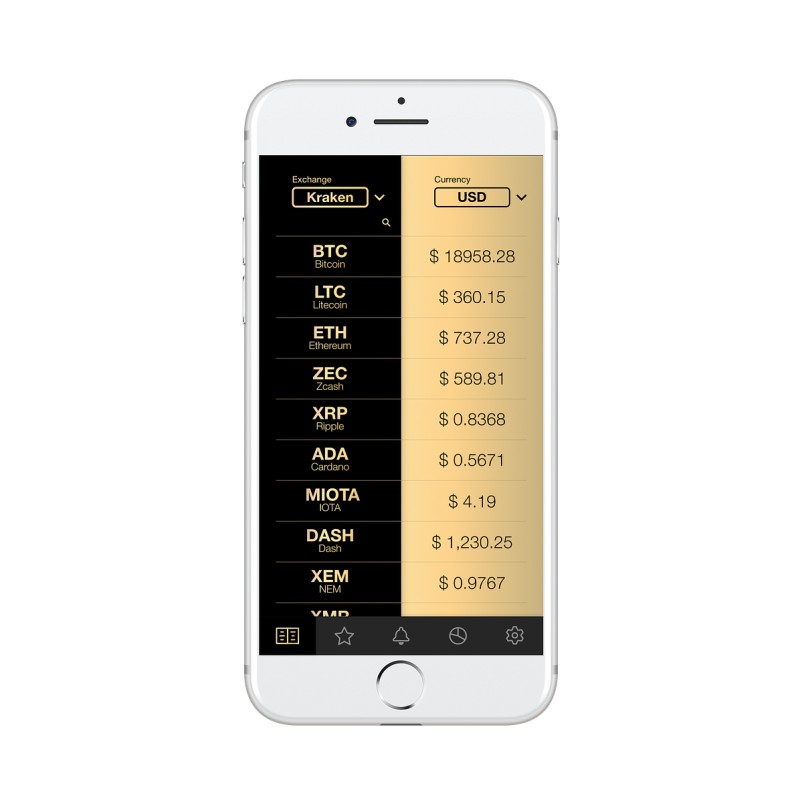
The core job of a cryptocurrency tracker app is to get your trades organized and visualized. You could track transfers by hand with spreadsheets, but linking exchange APIs and wallet accounts cuts the error rate to near zero. I like that it sends price alerts by email or text, so I don’t have to stare at charts like a degenerate. It also keeps a detailed record that helps at tax time - an audit trail for the authorities. And hey, don’t skip this part: a good tracker shows you what’s moving in the market without the noise. Set a price point, go live your life, phone buzzes. That beats glued-to-screen watching any day. Plus, the history view lets me see where I screwed up or won - a quiet teacher.
A cryptocurrency tracker app puts real-time prices, alerts, and portfolio totals in one place - no more tab circus.
Key Features to Look For
When you pick a cryptocurrency tracker app, check a few things so it fits your life. I always look at which exchanges and wallets it connects to, because a partial view is worthless. Also: what coins it knows, security steps, ease of use. Some include tax tools, others cost money - compare plans. A clunky menu defeats the purpose of simple tracking. You want to open it, see your numbers, and move on. If the app forces ten taps to find a balance, I ditch it. Good support matters too, in case something breaks.
What I check before installing
Some Popular Tracker Apps
There are plenty of ready-made tracker apps, each with a slant. CoinTracker is the tax-reporting workhorse, linking to 500+ wallets and exchanges. CoinStats targets casual or advanced traders wanting a clean experience with heatmaps. Delta lets you track crypto plus stocks and ETFs in one place. Zerion is for DeFi and web3 folks; Moonrig is open-source and free for privacy fans. DeFinance pushes real-time updates and custom alerts as a top pick. CoinTracking supports 8,000+ cryptocurrencies with deep analysis. Kubera is for high-net-worth users wanting a broad finance view. I’m not shilled by any of them - just mapping the terrain.
Apps worth a look
- CoinTracker: best for compliant tax reporting and DeFi support.
- CoinStats: best for user-friendly experience with 300 plus wallet links.
- Delta: best for mixed portfolios of crypto and traditional assets.
- Kubera: best for high-net-worth people wanting full finance view.
- Zerion: best for DeFi enthusiasts with self-custodial wallet.
- Moonrig: best for privacy-focused open-source monitoring.
- CoinTracking: supports over 8,000 cryptocurrencies and tax reports.
- DeFinance: real-time updates and wide wallet support.
The best crypto portfolio trackers sync with wallets and exchange accounts to give you a comprehensive view of your digital net worth. That’s the whole game.
Building Your Own Cryptocurrency Tracker App
If off-the-shelf apps don’t fit, you can build a cryptocurrency tracker app yourself. The play: let users connect exchange accounts via API keys and add public wallet addresses. Once added, the app pulls data to a central dashboard where you review history and performance. Most builders add filters and notifications for big price moves. Advanced versions include tax-loss harvesting and profit-loss analysis. You might even want a built-in markets list baked into the code for offline use. The build doesn’t need to be huge - start with a single page listing coins and totals, then add a detail view with graphs. Keep the code plain so you can fix it later. I’ve seen small projects grow into real tools by adding one feature at a time.
Using a Service Company for Custom Work
Some folks hire a software shop to build their cryptocurrency tracker app. Stfalcon is one such company - builds fintech and crypto tools, with case studies like a crypto wallet SDK and monitoring apps. They do product discovery, custom build, UI design, cloud help. Not saying you need them, but if you want a tailored trading app with extra bells, a team accelerates things. They stress blockchain work improves safety and transparency. A shop handles boring parts - server setup, compliance - freeing you to obsess over the user screen. Read their past work before signing. And never hand over keys unless read-only.
Making a Web Wallet Tracker with AWS
You can build a web-based cryptocurrency tracker app using Amazon Managed Blockchain services. The idea: AWS Amplify serves a React app, Amazon Cognito handles identity. The app asks the blockchain query service for token balances and history, then pairs that with a price API like CoinGecko. This dodges heavy index infrastructure and keeps cost pay-as-you-go. Solid path if you like cloud tools and want to show live crypto news alongside balances. The sample uses guest access for ease, but add user pools for safety. Deploy with AWS CDK and push to Amplify. Steps are clear if you know basic command line. I like that it removes the need to run your own node.

Cross-Platform App with .NET MAUI
A sample cryptocurrency tracker app built with Telerik UI for .NET MAUI shows how to track market data across devices. It uses controls like DataGrid, Chart, and ListView to show coins and price history. You load data from CSV files, tap a coin for a detail page with chart and grid of daily open/high/low. The demo switches between line and candle charts. If you want an Android crypto app from one codebase, this is neat. Navigation uses a tap event to push a new page. Data service reads last lines of files for current prices - keeps app light. Add more coins by dropping new CSVs. Good weekend build for a C# coder.
Flutter and CoinGecko API Build
Flutter is a UI toolkit to build native apps for mobile, web, desktop from one code. To make a cryptocurrency tracker app, you create a project, add http package, fetch from free CoinGecko API. Display the list with a simple widget, add pull-to-refresh. I like you can tweak icons, colors, sorting to make it yours. Fast way to get a working companion to trading sites - though it’s tracking, not buying. The fetch pulls top coins by market cap in USD, map JSON to list of names/prices, FutureBuilder handles wait, drop into ListTile. Honestly less than a hundred lines to get something useful on screen.
Simple React App Option
A straightforward cryptocurrency tracker app can be bootstrapped with Create React App. Folder has public and src, run npm start to see it at localhost. Fetch data from an API, set a proxy to avoid CORS in dev. Production build is offline-first PWA by default - cool for quick installs. Deploy to Firebase, GitHub Pages, Netlify documented. Good start if you like JavaScript and want light crypto software . Scripts let you test/build with one command. Use axios or fetch. Env vars with REACT_APP_ prefix baked at build. Start here if you know web basics and want a dashboard fast.

Adding Login to an Ionic PWA
If you build an Ionic progressive web app to track portfolio worth, you may want login. One example uses Okta for auth, Firebase for hosting. Clone starter, add OAuth settings, guard pages so only logged-in users see home. Note Okta changed free plan, deprecated CLI, so older steps may not match. Pattern of secure login works with many providers. Keeps your portfolio value view private. Login page calls implicit flow, home checks token, logout clears session. After build, Firebase gives public URL. Lighthouse can hit full marks with small fixes. Good for a personal tracker you only share with yourself.
Design Tips from Real Builds
Design matters for a cryptocurrency tracker app. Harshita Arora built one after getting annoyed by confusing interfaces and ads. She did market research, paper wireframes, mockups, then localized the app in over 20 languages because she saw no multilingual options. The app lets you pick exchange and fiat, search coins, view graphs, wishlist, set alerts by price or percent. Flutter guides suggest icons and color tweaks. Telerik uses segmented controls for time periods. Keep it simple so teenagers and new folks can learn. A clean screen with big numbers beats a busy one. I always tell friends: if you need a manual to read your own balance, the app failed. Use plain labels, avoid strange icons.

I set out to build a cryptocurrency price tracking app offering real-time prices on hundreds of cryptos, alerts, portfolio - all in a beautiful, sleek interface. That’s the bar.
Keeping Your Data Safe
Security is key when you share API keys, KYC info, wallet addresses with a cryptocurrency tracker app. Look for encryption, two-factor authentication, read-only API access to lower risks. AWS sample uses guest access which opens services to public, so better to use authenticated user pools. Okta adds OAuth login. Never give full withdraw rights to a tracker. Hey, don’t skip this part: weak platforms put your data at risk, so check before connecting. A read-only key means the app can see but not move funds. That’s the only kind I use. Also watch for phishing: if a tracker asks for your seed phrase, run away. Real trackers never need that.
Safety steps I recommend
- Use read-only API keys so the app cannot move funds.
- Turn on two-factor authentication for the tracker account.
- Check that API traffic is encrypted in transit.
- Prefer self-custodial or non-custodial options when possible.
Where to Host Your App
Once your cryptocurrency tracker app is built, you need a place to run it. AWS Amplify hosts React SPA, deploys on commit. Firebase hosts PWAs, scores well on Lighthouse. React Create App can go to GitHub Pages, Netlify, S3, Surge. Flutter targets mobile/web/desktop directly. Pick what you know; static hosts fine for simple dashboards. You might link to the best site for price feeds. Expect few users? Free tier enough. For a personal tool, avoid heavy servers. Plain static site with JS fetch is cheap and stable. Set cache headers if offline-first.
Hosting options
- AWS Amplify: auto deploy from CodeCommit for React.
- Firebase: good for PWAs with login and offline support.
- GitHub Pages: free static hosting for build folder.
- Netlify and Surge: simple drag or CLI deploys.
Real World Examples and Case Studies
Stfalcon shared fintech case studies like a crypto wallet SDK on Kotlin Multiplatform, e-distribution monitoring apps, bank kiosk design. Harshita Arora planned her app launch on App Store and Product Hunt on 21st January 2018, with a mailing list and many languages. Okta example deployed a PWA with perfect Lighthouse score. AWS sample goes live via Amplify. CoinTracker reports 2 million users trust it. These show a cryptocurrency tracker app can be small or big, alone or with a team. The variety tells me there’s no single right way. You can start solo with a free API and grow. Or brief a company for a custom build. Both paths deliver the same core win: clarity over chaos.
Case notes
- Stfalcon: crypto wallet SDK and monitoring apps for clients.
- Harshita Arora: multilingual tracker launched in 2018.
- Okta Ionic PWA: secure login and perfect performance score.
- CoinTracker: large user base with tax focus.
The takeaway: clarity beats chaos. Every time.
Related posts


Comments on “How to Build a Cryptocurrency Tracker App That Actually Keeps Your Digital Wallet in Check - Clarity Over Chaos”
No comments yet. Be the first to share your thoughts.