
- Zero trading fees - strictly during the Beta test phase
- No fine print, no hidden costs listed
- $5,000 USD equivalent deposit cap to keep backend stable
- Large deposits or withdrawals may take up to 24 hours while systems tune
Android Crypto App: What to Look For Before You Hit Deposit
21 September, 2026
0 comments
Android Crypto App: What to Look For
Picking an android crypto app feels like a maze. I’ve dug into what matters before you start. The big three: fees, security, and real features vs. fake hype. Maybe you want a trading app that actually works on your phone . Or you’re wondering about the best sites to trade crypto when you’re on a laptop. Either way, your Android app should be clear and fair. No mercy for the rest.
I’m not a shill. I’m a guy who read the fine print on a few apps and wallets. The short title of this post is Android Crypto App: Trading Options - translation: we’re looking at the choices inside these apps. A good android crypto app shows charts, moves coins, and guards keys. Some apps scream they’re the best crypto site , but surface shine fools nobody with sense. Losing coins to bad design is a crap feeling. I care because I’ve been there.
Why Fees Matter on an Android Crypto App
Fees eat your gains. I saw EQX Beta live on Android and iOS. They promise zero hidden fees and zero trading fees during the test period. Refreshing, because most exchanges cloud trading with hidden costs. But don’t skip the fine print: the zero-fee offer is Beta-only, limited time. After that, terms change. Bet on it.
What EQX Beta shows about fees
At EQX, we know crypto trading can be confusing, and often, it’s clouded by hidden fees, slow processing, and uncertainty about whether exchanges truly hold your assets.
That quote is from their announcement, not me. But it matches my worry. When you pick an android crypto app, check the fee page before you deposit. A real trading application worth its salt states costs plain and simple. If fee info hides behind a menu, that’s a red flag. Period.
Security Starts With the Wallet
An android crypto app usually ships a wallet or connects to one. I read up on Kraken Wallet - mobile, open-source. Its security architecture supports multiple blockchains and generates private keys with high entropy. Translation: the random numbers are near-impossible to guess. They use battle-tested crypto and the phone’s own secure hardware. Good.
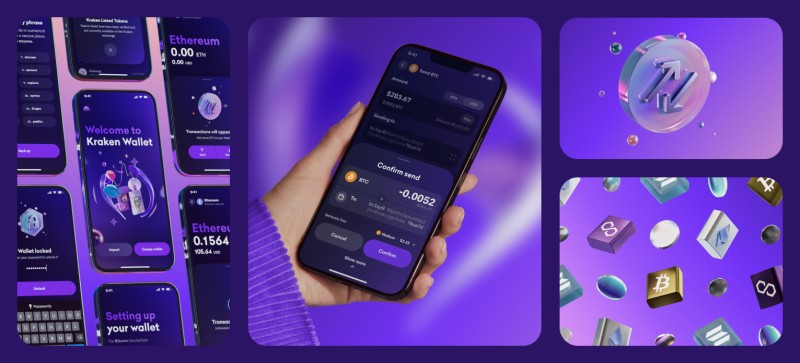
For an android crypto app, key storage is everything. On Android, Kraken Wallet puts private key material in Keystore. Public data goes to an encrypted database. That split saves you if the phone walks off. You want the which exchange is best for cryptocurrency question answered by storage facts, not Super Bowl ads.
Open Source and Verifying Code
Kraken Wallet is free, open-source under MIT license. I like it - you can verify the code yourself. Their guiding principle: “Don’t trust, verify!” For any android crypto app, open code means less blind trust. Smart.
“Don’t trust, verify!” is not just an industry maxim, it’s one of our guiding principles.
That’s from Kraken’s write-up. Applies to all apps. No code visibility? You’re trusting the team. A top 100 exchange list might rank an app high, but open code is the stronger signal. I’d check the repo over a glossy pitch any day.
How Keys Are Made on Android
Kraken Wallet uses React Native, which lacks built-in crypto. They used a pure-JS implementation of Node’s crypto module. Random bytes for key generation come from a polyfill, react-native-get-random-values. That keeps the seed random. For an android crypto app, a solid random seed is step one to safe keys.
The wallet holds two secrets: seed and mnemonic. Non-secrets - addresses, names - stored separately. Private material stays in Keystore on Android. Public material goes to encrypted Realm database. That split is a solid base for future key types: hardware wallets, multi-party compute.
Key Storage and Security Controls
Multiple security controls protect data in a self-custody wallet. App lock uses a random 64-byte string in Keystore with biometric or passcode. Password is user-provided, not stored on device, using Argon2 key derivation. Database encryption uses a random key. Lockout delays wrong password attempts. Basic hygiene.
Controls that protect your keys
- App lock via biometric or passcode (Keychain or Keystore)
- User password not stored on device, prompted when needed
- Database encryption for non-secret data, random key
- Lockout mechanism delays brute-force attempts
Entering an incorrect password triggers delays before subsequent password attempts can be made. This mechanism effectively deters brute-force password attacks.
Biometrics and Daily Use
Biometrics gate many actions: open app, foreground, view extended public keys, connect dApp, wipe data, delete wallet, enable app lock. That’s a lot of touch checks. For an android crypto app, this stops a thief from quick moves.
If you’re young hunting for an under-18 crypto wallet , note most self-custody wallets enforce age limits by policy. Source doesn’t specify, but it’s a real-world check. Some ask about crypto exchanges that take credit cards - that’s a payment method question, separate from wallet security. Know what you need before download. Obvious, but missed.
Smart Wallets Bring New Tools
Smart wallets use on-chain code to automate actions. Multi-signature, passkeys, social recovery, behavior checks. I found a piece on self-custodial smart wallet security: multi-sig needs at least two independent signatures to confirm outgoing tx. That beats a single PIN if your seed leaks. Hard agreement.
Smart wallet features to know
- Multi-sig config requiring 2+ signers
- Passkeys via crypto/biometrics, private key stays on device
- Social recovery with guardians you trust
- Automated checks: daily withdraw limits, address whitelist
Multi-sig wallets offer a measure of protection over such an occurrence by only allowing transactions to be made using at least 2 independent inputs or signatures, decentralizing access to your keys.
Charts and Indicators in a Trading App
A good android crypto app needs clear charts. SciChart built a financial chart component for iOS and Android. Supports 20+ technical indicators: moving averages, RSI, Bollinger Bands, MACD, more. For a trader, that’s the core of an app for crypto trading view.
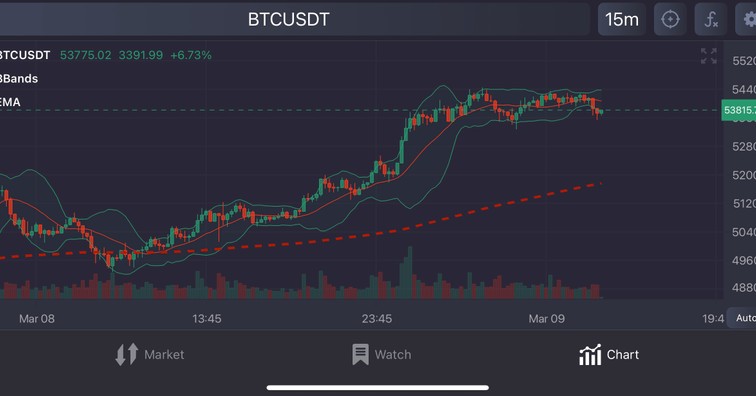
Demo app lets you swap instrument from a dropdown - coins from Binance. Timeframe: 1-min, 5-min, hourly, daily. Shows what a best trading application packs into a phone screen. Switching coins fast matters when markets move. Speed is money.
Touch Zoom and Custom Views
Rich zoom, pan, scale via touch. Pinch-zoom the main chart on Android. All panes move in unison. Cursors and active legends show values under touch. Change indicator styles - line width, color - on the fly.
Chart tools that help on a phone
- Pinch zoom and pan synced across panes
- Custom cursor with active legend showing price/indicator values
- On-the-fly change of indicator length and line style
- Live market data via WebSocket in demo
Our financial charting component supports rich zooming, panning and scaling via touch.
Live Market Data on Your Phone
SciChart demo connects to Binance for live and historical data. New prices stream via WebSocket, update candles. Code can swap to any source. Key for an android crypto app showing real prices, not fake ones.
When you check best sites to trade crypto , see if the app uses real exchange feeds. A best crypto site with laggy data costs you. Also consider sending crypto from the app: network validation and fee sanity checks matter. I want my send screen to shout if I pick the wrong chain.
Trading Without a Separate App
Phoenix Trade is an on-chain perpetuals exchange on Solana. Mobile access via phone browser or wallet-embedded browser. No separate download. Different take on android crypto app use. Platform runs a fully on-chain orderbook - every order lives on Solana’s ledger.
A fully on-chain orderbook means real buyers and sellers are matching directly, with the blockchain serving as both the matching engine and the settlement layer.
Phoenix hit $4.3M all-time high daily volume before mobile launch. Most perp platforms use off-chain matching or price feeds. This direct model matters if you compare which exchange is best for cryptocurrency on speed and trust. I like no extra app to update. Less friction.
Staking and Coins on BISON
BISON is another app with crypto. Supports staking for passive income via network validation. Added Cardano, Solana, Polkadot for buy/sell. Their blog explains hard fork as a chain split, distinct from soft fork.

BISON also has web for laptop/tablet. Not strictly android crypto app, but shows cross-device thinking. If you ask can you trade crypto on Sofi , that’s a different broker - many places exist. Point: pick based on coins and staking you want. Don’t grab an app because a friend said.
Proof of Reserves and Transparency
EQX Beta claims real-time proof of reserves - you see if they hold assets. Kraken Wallet got external audit by Trail of Bits. Both point to transparency. For me, an android crypto app must show where coins sit. Or it’s a no.
EQX is more than just an exchange-it’s a movement to rebuild trust in crypto through transparency, security, and user-first design.
Their words, but trust is earned. A top 100 exchange ranking shouldn’t replace your own reserve check. Open the app, find the proof link. If it’s buried, that’s a smell.
Signing and Checking Transactions
Sign a tx, app derives private key from seed in Keystore. Biometrics confirm actions like sending coins. Kraken Wallet uses external API services to simulate tx and assign risk score. Blocks malicious tx or warns you. Address validation, full address view, network warnings, fee sanity checks built in. Table stakes.
Checks before you sign
- Tx simulation with risk score from external API
- Address validation to avoid wrong recipient
- Full address visible to avoid targeted attacks
- Network validation and fee sanity checks
We use external API services (such as Blowfish and others) to check the possible levels of “severity” that a transaction can bring to the user (a risk score).
Keeping Your IP Private
Kraken Wallet uses an API gateway to proxy requests. Stops third parties seeing your IP or personal data. For an android crypto app, network privacy is missed but critical. You don’t want trading habits leaked to ad nets. I’d check for own proxy before trust.
Watch Out for Fake Hype
Some apps look good on surface, lack substance. The short description of this post says picking an android crypto app feels like a maze, skip fake hype. I echo it. App brags but no fee sheet, no audit, no clear key storage? Step back.
You’ll see ads for the best trading application with shiny pics. Look for plain facts. Does it allow sending crypto with address checks? Warn on wrong network? Those boring bits matter more than colors. I learned hard, trusting a pretty UI once.
Keeping Your Coins Safe Day to Day
Smart contracts can set daily withdraw limits, time delays for large moves, whitelists of trusted addresses. Automated checks in self-custodial smart wallets. I like it - buys time if a key leaks.
Daily safety checks to look for
- Daily withdrawal limits via smart contract
- Time delay for large withdrawals
- Whitelist of approved addresses for send/receive
- Address validation to avoid wrong recipient
Smart contracts can also be enabled to protect your crypto assets by providing automated checks on your financial behavior, including daily withdrawal limits.

Comments on “Android Crypto App: What to Look For Before You Hit Deposit”
No comments yet. Be the first to share your thoughts.