Best Trading Apps for Cryptocurrency and What to Watch Out For
Best Trading Apps for Cryptocurrency and What Actually Matters
I'm going to cut through the noise here. The best crypto trading app for you depends on three things: what coins you want, how much you trade, and whether you can trust the platform with your money. That's it. Everything else is marketing fluff.
A strong cryptocurrency trading app should do three things well: keep your funds safe, charge fair fees, and actually be easy to use on your phone. Global adoption hit more than 420 million users, and the number keeps climbing. The United States remains a major hub because of regulatory oversight. After FTX and Voyager collapsed in 2022, investors started demanding proof-of-reserves audits, insured custody, and transparent reserve reporting. Smart move.
How to Pick a trading platform for cryptocurrencies
Compliance, fees, security, and user experience all affect the safety of your funds and the return you actually keep. No single platform excels in every category. Coinbase, Robinhood, Gemini, SoFi, and Public.com emphasize ease of use. Kraken, Binance.US, Bybit, OKX, KuCoin, Bitfinex, and TradeStation go heavier on advanced trading, liquidity, and lower costs. Crypto.com, Uphold, Bitpanda, eToro, and SwissBorg mix trading with payments, staking, social tools, or other asset classes. Swan and Cash App focus on Bitcoin. Trust Wallet, TronLink, OKX Wallet, and other self-custody wallets focus on storing and transferring assets like USDT.
Main selection criteria
- Regulatory compliance - a platform should be licensed or registered where it serves users. US-regulated options include Coinbase, Kraken, and Binance.US. Busha is licensed by Nigeria's SEC. Bitfinex is unavailable in the US. SwissBorg doesn't serve US users.
- Security standards - look for two-factor authentication, cold storage, proof-of-reserves reporting, digital-asset insurance, withdrawal controls, and a clear explanation of how funds are protected.
- Fee transparency - maker-and-taker fees are easier to compare than spread-based pricing. Review deposits, withdrawals, instant-buy markups, conversions, and crypto-to-crypto charges.
- Mobile experience - the app should support smooth navigation, real-time price data, alerts, deposits, withdrawals, and order management without excessive complexity.
7 Top Crypto Trading Platforms for 2026
Why Fees, Security, and Usability Matter
A platform charging a 1.5% spread can cost thousands of dollars annually for a frequent trader. A difference of 0.2% per trade compounds into a substantial long-term cost difference for high-volume users. Security practices vary wildly between platforms. A platform without proof-of-reserves reporting, insurance, or a clear custody structure exposes users to greater counterparty risk. A hack, insolvency, or collapse can mean permanent loss. Usability matters for a different reason: a confusing interface causes incorrect selections, missed trades, failed withdrawals, or impulsive transactions.
A platform that charges a 1.5% spread can cost thousands of dollars annually for a frequent trader. The impact is even greater when deposits, withdrawals, instant purchases, or conversions carry separate markups.
Security Practices to Verify
Two-factor authentication requires an additional identity check after username and password. Depending on the platform, this takes the form of a known PIN, a randomly generated authenticator code, biometrics, or another method. Cold storage keeps cryptocurrency offline and outside a direct internet connection to the exchange. If an online system gets compromised, assets held in cold storage may remain inaccessible to the attacker.
Coinbase reports 98% of customer funds stored in cold storage. Swan uses BitGo for cold-storage custody. Binance.US cites cold storage and the SAFU fund. Crypto.com reports regular audits of its reserves. Proof-of-reserves reporting is used by Kraken, Uphold, and other platforms to show that customer deposits match assets held. These reports provide useful transparency but don't remove every risk associated with an exchange.
Fee Structures to Compare
Maker and taker fees are charged when a trader adds or removes liquidity. A maker places a limit order that doesn't immediately fill. A taker uses available liquidity and pays a taker fee. These fees are often displayed as percentages and can be compared directly. Spreads are the difference between buy and sell price. Robinhood, PayPal, SoFi, Cash App, Public.com, and eToro are primarily described in terms of spreads rather than maker-and-taker rates.
A zero-commission label doesn't mean every purchase is free if a spread or conversion markup still applies. Instant-buy markups can be higher than the displayed spot-trading fee. Coinbase Advanced Trade is listed at 0.40% maker and 0.60% taker, while instant purchases may carry an approximately 1% to 2% spread. Other charges include deposit or withdrawal fees, flat withdrawal charges, network fees, conversion spreads, gas costs, and fees for copying another trader.
Fee types to watch
- Maker and taker fees - charged when adding or removing liquidity
- Spreads - the difference between buy and sell price
- Instant-buy markups - often higher than spot-trading fees
- Deposit and withdrawal fees - flat charges or percentage-based
- Network fees and gas costs - vary by blockchain
- Conversion spreads - applied when swapping between assets
A zero-commission label does not mean that every purchase is free if a spread or conversion markup still applies. Read the fine print. Always.
Cryptocurrency Trading on Mobile Devices
A mobile cryptocurrency app lets users buy, sell, hold, stake, or trade digital assets from a phone or tablet. Most leading exchanges provide Android and iOS versions through Google Play and the Apple App Store. Common mobile functions include depositing and withdrawing funds, buying and selling spot assets, placing limit/stop-loss/take-profit orders, trading derivatives, staking, tracking balances, accessing wallet and DeFi functions, getting customer support, and setting price alerts.
Mobile apps have two notable advantages over browser-only platforms. Customizable push notifications alert users to price movements, order fills, and account events. Biometric login provides faster access through fingerprints or facial recognition, though biometrics should be treated as one part of a broader security setup, not the only protection. A mobile screen is less suitable for in-depth research. Small controls and limited screen space contribute to accidental selections, missed information, or impulsive trades. Experienced traders may prefer a desktop platform for primary research and execution while keeping a mobile app for monitoring and occasional trades.
Beginner-Oriented and Regulated Trading Apps
Coinbase is positioned as the most beginner-focused cryptocurrency exchange in the US. Founded in 2012 and listed on NASDAQ. Advanced Trade fees: 0.40% maker and 0.60% taker. Instant purchases carry approximately 1% to 2% spread. Minimum deposit: $2. More than 250 supported assets including Bitcoin, Ethereum, stablecoins, and major altcoins. 98% of customer funds reported in cold storage. Eligible USD balances FDIC insured up to $250,000.
The basic account is designed for simple purchases, recurring buys, and portfolio management. Coinbase Learn and Coinbase Earn provide educational material and token-related rewards. Coinbase Wallet is a separate non-custodial wallet giving users direct control of their keys. Custodial exchange balances and self-custodied wallet balances have different security and recovery arrangements. The primary disadvantage is cost. Instant purchases can be expensive, and the basic product is less suitable for high-frequency trading.
Best Crypto Trading Apps 2026: Features & Tips
Kraken
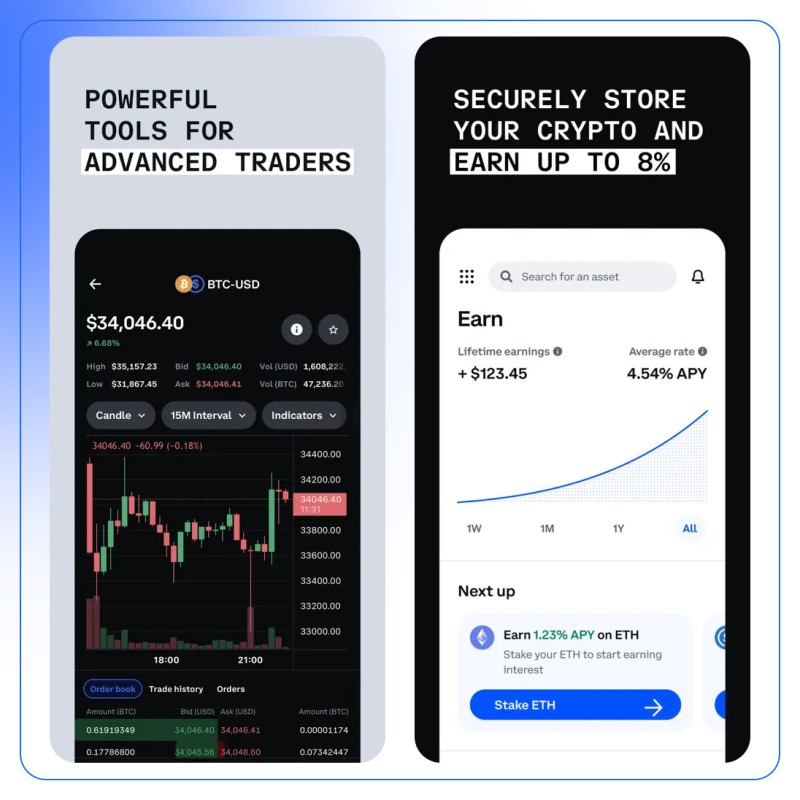
Kraken is positioned for advanced traders who value liquidity, transparency, security, and a broad set of trading options. Launched in 2011. Fees: 0.16% maker and 0.26% taker. Minimum deposit: $10. More than 220 assets reported. Spot, margin, and futures trading available. Proof-of-Reserves audits introduced early in the industry. Staking for more than 20 cryptocurrencies at reported yields of 3% to 12% APY. USD, EUR, and GBP deposits supported.
Kraken was among the first major exchanges to publish proof-of-reserves information. The platform is described as having avoided major hacks and consistently ranking highly in global trust measures. Kraken has a standard interface for basic functions and Kraken Pro for professional users. The standard mobile app supports buying, selling, conversion, portfolio tracking, and asset research. Kraken Pro provides real-time pricing, fast execution, advanced charts, order-book displays, conditional orders, staking, and margin trading up to 5x leverage.
Gemini, Robinhood, and Busha
Gemini is presented as a security- and compliance-driven US exchange. Founded in 2014 by the Winklevoss twins. Fees: 0.20% maker and 0.40% taker. Minimum deposit: $5. More than 120 supported coins. SOC 2 Type II certification. Cold storage and cited insurance coverage. FDIC coverage for eligible USD balances. The main disadvantages are higher fees than Kraken and Binance.US, plus controversy surrounding the Gemini Earn program after its partner Genesis collapsed.
Robinhood Crypto is positioned as a zero-commission option for casual US investors who want stocks, ETFs, and cryptocurrency in one interface. $0 commission. Typical spread: approximately 1% to 2%. Minimum deposit: $1. 18 supported cryptocurrencies. SIPC coverage listed for USD holdings. Fractional cryptocurrency purchases. Crypto wallets added in 2023, allowing withdrawals. The limitations include a short coin list, no staking, no DeFi functions, and relatively transparent restrictions for advanced traders.
Busha is positioned as a mobile-first crypto app designed for Nigerian users. Licensed by the Securities and Exchange Commission of Nigeria. Described as fully compliant with Nigeria's Data Protection Act. Local payment options for funding and withdrawals. Busha Spend for using crypto on everyday purchases. Busha Earn with up to 7.5% interest on stablecoin holdings. Available through Google Play and the App Store. The app-opening process is simple: download, register and verify, add money, buy/sell/earn/spend crypto.
SoFi, Public.com, and Social Trading Apps
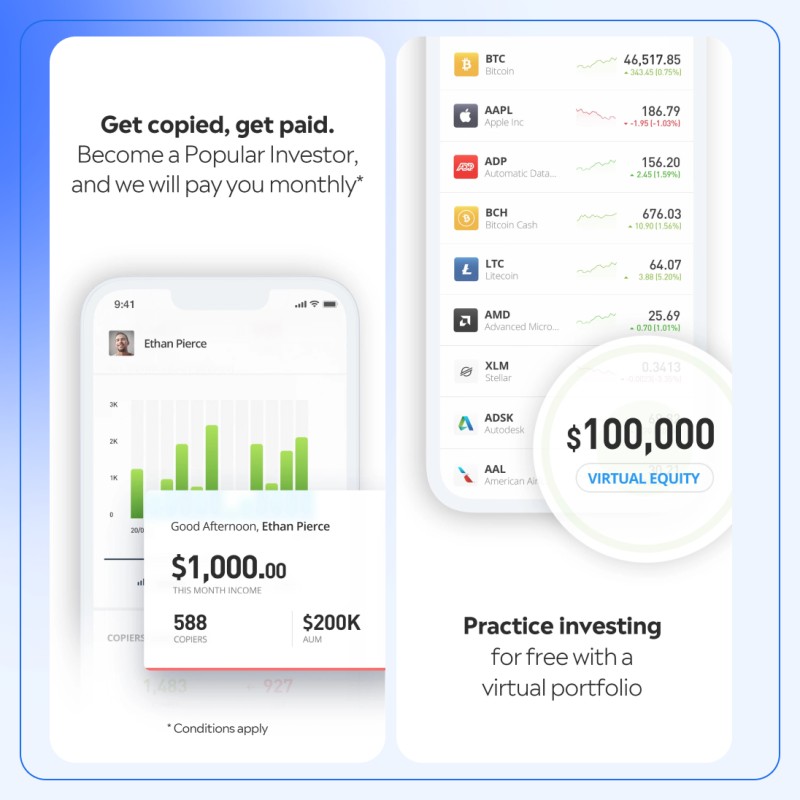
SoFi Invest Crypto is positioned for beginners who want cryptocurrency inside a broader financial-services app. Spread: approximately 1.25%. Minimum deposit: $10. More than 20 supported coins. Recurring cryptocurrency purchases. Integration with portfolio snapshots. SoFi appeals to users who already manage student loans, mortgages, stocks, or other investments in the same ecosystem. Its limitations include a shorter coin selection and wider spreads than pure-play crypto exchanges.
Public.com Crypto is positioned for casual investors who want a social investment community and a combined stock-and-crypto app. Spread: approximately 1.0%. Minimum deposit: $1. More than 30 supported coins. Crypto added in 2021. Community comments, trade sharing, and social investing. Public.com's community model allows users to publish ideas, comment on trades, and observe other investors. This can help beginners learn how decisions are made, but it can also encourage herd behavior and copying trades without independent analysis.
Advanced Trading and Derivatives Apps
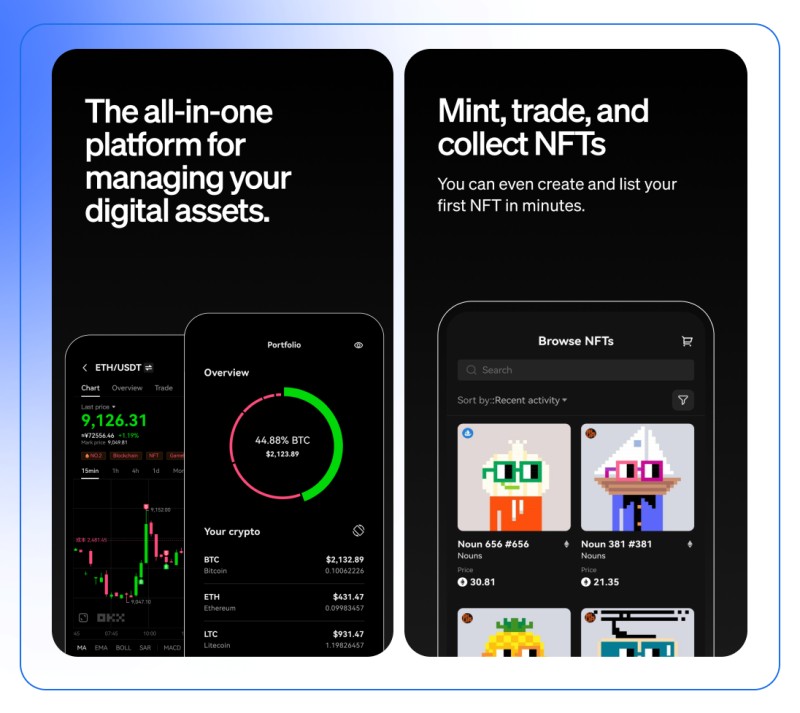
Global Binance and the US-regulated Binance.US are related but distinct offerings. Global Binance is described as one of the largest cryptocurrency exchanges. It offers a large asset selection, limit orders, stop-loss orders, margin trading, and high market liquidity. The global app has a large number of features and may appear overwhelming to beginners. Kraken and SwissBorg are identified as more manageable alternatives.
Binance.US details include 0% on listed Bitcoin spot pairs, 0.0% maker and 0.10% taker on other listed pairs, minimum deposit of $10, approximately 150 supported coins, professional charts and staking, cold storage and the SAFU protection fund. The US profile positions Binance.US as the lowest-fee US option. It has fewer fiat deposit methods than Coinbase and customer support is described as less responsive. Its parent company has faced regulatory and legal challenges in multiple jurisdictions - distinguish this from the regulation of the US branch itself.
Bybit, OKX, KuCoin, and SwissBorg
Bybit is a centralized exchange focused on derivatives and perpetual contracts. Perpetual contracts are futures-style instruments without a fixed expiration date. Advanced derivative trading, high leverage options, competitive fees for active traders, price alerts, market analytics, more than 150 cryptocurrencies listed. Bybit was described as a top-two centralized exchange by CoinMarketCap capitalization. Legal availability and product features vary by jurisdiction.
OKX combines an exchange, advanced trading tools, and a Web3 wallet. The mobile app includes user-centric design, a large crypto selection, low or minimal fees, limit/stop-loss/take-profit orders, margin trading, market and technical analytics, multi-chain and cross-chain DEX access, yield farming, NFT marketplace, Web3 wallet storage, support for more than 1,000 decentralized-app protocols. Its feature set may appear dense to beginners. A 2024 assessment identified the lack of a direct fiat off-ramp as a limitation.
KuCoin offers spot and margin trading, portfolio tracking, card purchases, automated trading, and several earning programs. Millions of reported iOS and Android downloads. Card-based purchases, asset trading with low fees, spot and margin orders, trading bots, KuCoin Win and KCS bonuses, around-the-clock support. KuCoin Earn is described with returns ranging from approximately 0.4% to 101% across 60 assets. Many listed rates fall in the 20% to 60% range. These rates depend on the specific token, lock-up period, and program terms.
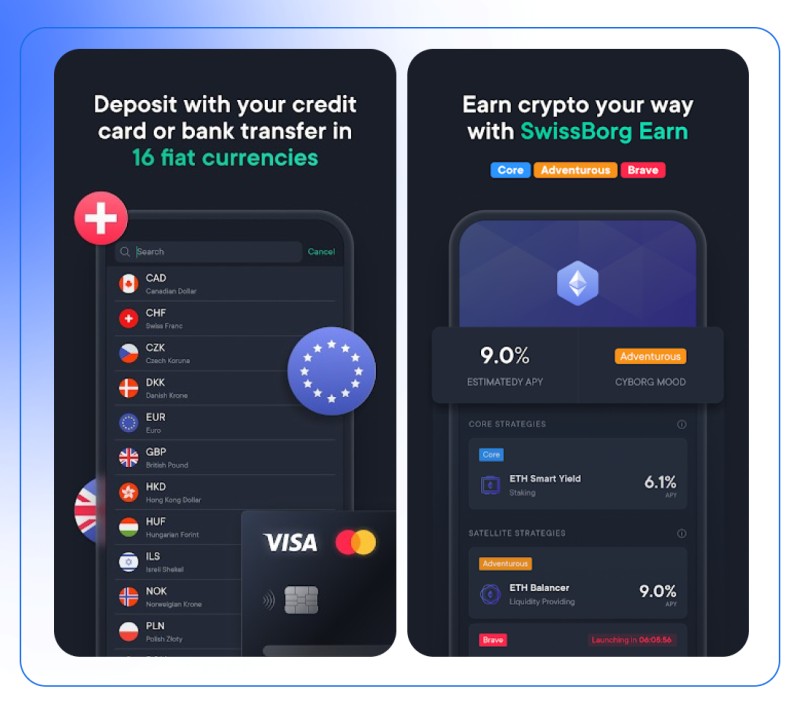
SwissBorg is a cryptocurrency wealth-management platform with desktop and mobile access, exchange integration, and DeFi connectivity. It combines automated or managed wealth features with a community-focused interface. A January 2024 mobile assessment reported a 4.5-star app rating, more than 115 supported countries, a $53 million funding round, and a reported $1 billion valuation. SwissBorg does not provide services to US users because of financial regulations.
Advanced platform features
- Margin and futures trading - leverage positions up to 5x or higher
- Conditional orders - stop-loss, take-profit, limit orders
- Customizable charts and technical analytics
- API access for automated trading strategies
- Staking and earning programs with variable APY
- Multi-chain and cross-chain DEX access
Crypto.com, Uphold, and Bitpanda
Crypto.com is positioned as an all-in-one mobile crypto ecosystem. Launched in 2016. Fees: 0.075% maker and 0.075% taker. Lower fees when CRO is staked. Minimum deposit: $20. More than 300 supported assets. Spot trading, staking, an NFT marketplace, and a Visa debit card. Assets insured up to $750 million. Regular audits reporting 100% reserves. The app combines trading with payments. Its Visa card allows users to spend crypto and earn cashback in CRO. Crypto Pay allows users to pay with crypto by phone at stores accepting Visa. The mobile app is described as mobile-first. A 2024 assessment noted that Crypto.com's US users relied on the mobile app because the desktop version was described as unavailable in the country. Disadvantages include slow chat support, spreads that can be relatively high on small trades, and frequent changes to rewards programs.
Uphold is positioned as a multi-asset platform for investors who want exposure beyond cryptocurrency. Spread-based pricing around 1% for crypto. Minimum deposit: $10. More than 200 supported assets. Digital currencies, stocks, precious metals, and foreign exchange. Real-time proof-of-reserves. Customer assets backed 1:1. Its main disadvantage is that crypto spreads are wider than those of low-fee exchanges such as Binance.US.
Bitpanda is an Austria-based platform offering crypto, stocks, and precious metals. User-friendly interface. Three crypto index funds. Bitpanda Pro for high-volume traders with lower fees at higher trading volumes. Main disadvantages are a smaller coin selection, comparatively high crypto fees, and availability only in Europe.
Essential Trading Apps You Need
Bitcoin-Only and Casual Investment Apps
Swan is a Bitcoin-only platform focused on recurring purchases and dollar-cost averaging. Fee: 0.99% for recurring purchases. Minimum deposit: $10. Bitcoin only - no altcoins, no staking, no advanced trading. Bank-account connection and automatic purchase schedules. Cold-storage custody through BitGo. Bitcoin education, reports, and webinars. Swan is positioned for long-term Bitcoin investors who want a disciplined, distraction-free accumulation process. Its limited product range is both its defining feature and its main constraint.
Cash App, owned by Block, Inc., formerly Square, integrates Bitcoin purchases with peer-to-peer payments. Bitcoin only. Average spread around 1.75%. Minimum deposit: $1. Peer-to-peer payment interface. External wallet withdrawals supported. No altcoins, no staking. Cash App makes buying Bitcoin available from an app already used for payments. External withdrawal support gives users more control than apps that restrict withdrawals.
PayPal is positioned as the most accessible crypto option for users who don't want to create a separate exchange account. More than 430 million global accounts. 1.5% spread on most trades. Minimum deposit: $1. Five supported assets: BTC, ETH, LTC, BCH, and PYUSD. Crypto integrated into the payments interface. No staking. Withdrawal restrictions in some regions. PayPal supports very small purchases and uses a familiar payments interface, but the short asset list and spread-based pricing make it unsuitable for active traders.
USDT TRC20 Wallet Apps and P2P Transfers
USDT TRC20 is Tether running on the TRON blockchain. Compared with the ERC20 version on Ethereum, TRC20 transfers are generally associated with lower network fees (usually $0.50 to $1), faster confirmations (typically one to three minutes), and lower-cost, faster P2P, remittance, and high-frequency transfers. USDT versions may look similar in an interface, but sending on the wrong network can result in lost funds. A recipient's wallet network, a sender's supported networks, and the official contract address must be checked before every transfer.
Choosing a USDT TRC20 Wallet
Important criteria include security track record, native TRON and USDT TRC20 support, multi-chain capability, mobile and desktop availability, ease of sending to exchanges and receiving from buyers, smart-contract audits, hardware-wallet compatibility, backup and private-key controls, and availability in the user's country. The shortlist presents Trust Wallet, TronLink, OKX Wallet, Bybit Web3 Wallet, imToken, and Klever Wallet as active options. Atomic Wallet is discussed separately as a platform that was removed from recommendations.
Wallet security ratings
- Trust Wallet - highest five-level rating, beginner-oriented multi-chain wallet with more than 10 million users
- TronLink - highest five-level rating, purpose-built for TRON users and high-volume USDT senders
- OKX Wallet - highest five-level rating, multi-chain trading wallet with cross-chain bridge
- imToken - highest five-level rating, security-conscious wallet with 10+ years without a major incident
- Bybit Web3 Wallet - four-level rating, exchange-connected wallet for existing Bybit users
- Klever Wallet - three-level rating, TRON staking and KLV rewards focused
- Atomic Wallet - not recommended, suffered a major breach in June 2023 with more than $100 million stolen
Trust Wallet is described as the most widely used non-custodial mobile wallet and a top option for beginners and P2P traders. Native TRON and USDT TRC20 support, more than 10 million assets and more than 100 blockchains, built-in DEX swaps, iOS and Android availability, free download, no exchange account required. Users remain responsible for safeguarding the recovery phrase.
TronLink is purpose-built for users who stake TRX, participate in TRON decentralized applications, or send TRC20 tokens frequently. Endorsement by the TRON Foundation, direct Tronscan transaction integration, TRX staking, bandwidth and energy management, browser extension and mobile app. The reserve report assigns it the highest five-level security rating.
OKX Wallet is described as a capable Web3 wallet for users who move assets across TRON, Ethereum, and other networks. Support for more than 80 blockchains, built-in cross-chain bridge, DEX aggregator across more than 300 protocols, multi-party computation security avoiding a single point of failure, Ledger hardware-wallet compatibility. Also receives the highest five-level rating.
imToken was launched in 2016 and has a strong following in Asia, Southeast Asia, and West Africa. More than 10 years without a reported major security incident, audited smart contracts, TRC20/ERC20/BEP20 and more than 30 other chains, multilingual support. Positioned for security-first users where reliability matters more than exchange-style functionality.
Official USDT TRC20 Contract Address
The official USDT TRC20 contract address is: TR7NHqjeKQxGTCi8q8ZY4pL8otSzgjLj6t. The address should be verified on Tronscan before a transfer. A legitimate address is expected to show a large total USDT supply and ongoing transaction activity. A different contract address presented as official USDT should not be used unless independently verified through a trusted source.
Safety Practices for USDT TRC20
Never share a recovery phrase. A legitimate wallet, exchange, or support agent should not ask for it. Enable 2FA on any exchange account connected to the wallet. Use a hardware wallet such as Ledger or Trezor for long-term storage of large balances. Keep enough TRX available to pay for bandwidth or energy. Verify the network and contract address on Tronscan. Send a test transaction before sending a large amount to a new address. Update wallet applications regularly. Confirm whether a platform supports TRC20, ERC20, or both before transferring. Treat wallet support, transaction fees, and settlement times as network-specific. Avoid using an address supplied solely in an unsolicited message.
Platform Selection by Trading Need
Pure crypto beginners in the US are most consistently directed toward Coinbase because of simple onboarding, regulatory status, educational material, and insured USD balances. Robinhood is a simpler commission-free alternative with a limited coin list. Kraken and SwissBorg are identified as manageable mobile starting points. Investors prioritizing regulation and security may compare Coinbase, Kraken, and Gemini. Advanced and high-frequency traders are directed toward Kraken Pro, Binance.US, global Binance, Bybit, OKX, and KuCoin. Social investors may consider eToro, Public.com, and the social functions described for Bybit and SwissBorg. Users who want trading and payments in one app may compare Crypto.com, Uphold, Bitpanda, PayPal, and Busha. Bitcoin-only investors can compare Swan and Cash App. USDT TRC20 users can compare Trust Wallet, TronLink, OKX Wallet, Bybit Web3 Wallet, and imToken.
Regional limitations are substantial. Bitfinex is described as unavailable in the US. SwissBorg does not serve US users. Bitpanda is Europe-only. Global Binance features and legal availability vary by country. Busha is designed primarily around Nigeria. OKX was described as lacking a direct fiat off-ramp in a 2024 assessment. Users should verify current local availability before downloading or funding an app.
Checks Before Opening or Funding an Account
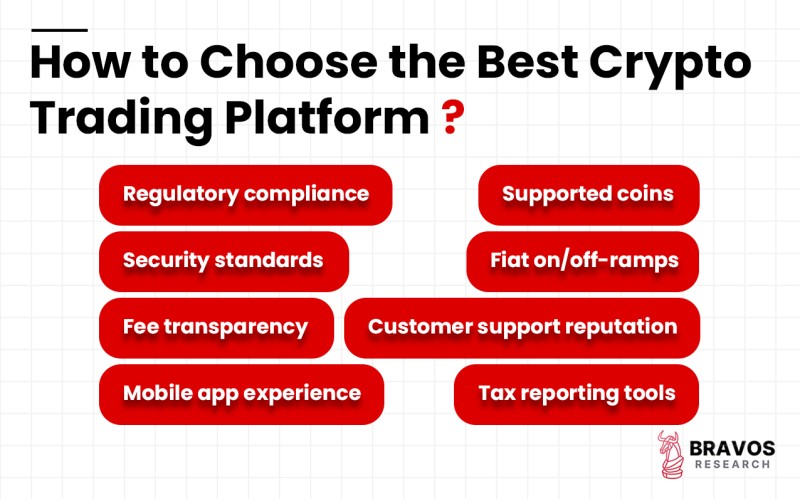
Confirm that the platform is licensed or authorized in the user's country. Verify whether the app is offered by the platform named in the listing. Read the maker, taker, spread, deposit, and withdrawal fees in full. Check whether the quoted asset count applies to the web platform, exchange, Advanced interface, or wallet. Determine whether USD, EUR, GBP, or local fiat can be deposited and withdrawn. Enable two-factor authentication and biometric login where appropriate. Review cold-storage, proof-of-reserves, and insurance statements. Keep the trading device free from malware. Use unique passwords and avoid storing credentials in unencrypted files. Test a small deposit and withdrawal before moving a large balance. Verify the correct blockchain and contract address before transferring USDT. Review the order-book depth and fees before entering a large trade. Compare platform support with backup channels such as chat, email, and phone support. Check whether margin, futures, leverage, staking, lending, or rewards are legally available. Treat leveraged derivatives as high-risk positions that can result in rapid liquidation. Review lock-up periods and variable APYs before committing funds to earning programs. Confirm tax-reporting and transaction-history tools. Avoid relying on social trends, copied trades, or app-store ratings as substitutes for independent research. Recognize that cryptocurrency markets are highly volatile and that the underlying materials are informational rather than financial, legal, or tax advice.
The best crypto trade app is the one that matches your experience level, your coin needs, and your risk tolerance. A beginner needs a simple interface, clear navigation, educational material, and responsive support. An advanced trader needs margin or futures trading, analytics, customizable charts, conditional orders, high liquidity, leverage, and lower transaction fees. The top rated crypto exchanges share one thing in common: transparent fee structures and strong security practices.
apps for cryptocurrency trading have two notable advantages over browser-only platforms. Customizable push notifications alert users to price movements, order fills, and account events. Biometric login provides faster access through fingerprints or facial recognition, though biometrics should be treated as one part of a broader security setup, not the only protection. An android crypto app gives you portability, but a small screen is less suitable for in-depth research. Small controls and limited screen space contribute to accidental selections, missed information, or impulsive trades.
The crypto currency trading app landscape keeps evolving, but the core selection criteria don't change. Regulatory compliance, security standards, fee transparency, mobile experience, supported assets, fiat on-ramps, custody model, tax tools, customer support, and liquidity all matter. A app for crypto trading that checks these boxes is worth your time. One that skips them is a gamble you don't need to take.
A best app for crypto trading should do three things well: keep your funds safe, charge fair fees, and actually be easy to use on your phone. Compare what matters so you don't pick a platform that costs you more than it should.

Comments on “Best Trading Apps for Cryptocurrency and What to Watch Out For”
No comments yet. Be the first to share your thoughts.