How Crypto Marketplaces Work and What You Should Compare Before Choosing
Why Crypto Marketplaces Are Moving More Than Coins
A crypto marketplace isn't just a place to swap coins. It's a catch-all term that covers exchanges, NFT shops, decentralized apps, API directories, ad networks, loyalty programs, payout rails, and prediction markets. Some platforms mash several of these together. The unit being traded changes - tokens, digital art, data access, ad space, reward points, creator earnings, or bets on future events. The control structure changes too. Smart contracts run some. Companies run others. Payment processors sit in the middle of plenty. I've watched this space long enough to know the label tells you almost nothing about what you're actually using.
The Many Faces of a Crypto Marketplace
Forms a marketplace can take
- Exchange for coins and financial products
- Shop for NFTs and digital goods
- Decentralized app built on smart contracts
- Directory for finding and accessing APIs
- Advertising and media marketplace
- Loyalty or rewards environment
- Payout service for creators and businesses
- Prediction market
Each model settles payments differently. Each sets its own fees, onboarding rules, and key custody. Some let you hold keys. Others just show you a balance on a screen. The difference matters when things go wrong.
SEC Staff Rewrites Howey Test for Functional Networks
Gemini's Pivot From Exchange to Super App
Gemini started as a Bitcoin exchange in 2015. Expanded to more coins. Launched a crypto rewards credit card. Then the founders decided prediction markets would be as big as capital markets. They secured a license. Launched Gemini Predictions in mid-December. Reported 10,000 users and $24 million in trading volume fast. They call it a "truth machine" inside the app. A way to see the future.
Prediction markets can use the wisdom of crowds and the power of markets to provide information about future events.
The company also went all in on AI. They say it turned 10x engineers into 100xers. Workforce peaked at 1,100 in 2022. Dropped to about half by end of 2025. Cut another 25 percent after that. Founders say smaller plus right tools equals faster. They're exiting the UK, EU, and Australia. Focusing on America. Their sequence: simplify, consolidate, then accelerate.
NFTs and the Ownership Question

Devin Finzer co-founded OpenSea. Calls it the first and largest marketplace for user-owned digital goods. NFTs let you own digital items like physical ones - mostly on Ethereum, a database that can't be altered. The hype hit hard in 2021. LeBron dunk NFT for $200K. Kings of Leon album. Beeple JPEG for $69 million. OpenSea raised $23 million.
But Finzer's point was never just about collecting. It was about who owns the data. The platform or the user? NFTs represent the first instance of users really owning their data. He said it's the beginning of a big paradigm shift. The ownership question isn't limited to the token. It concerns the media, availability, and control surrounding the digital good.
The Decentralized Marketplace Myth
Moxie Marlinspike built two web3 apps to understand how it actually works. Autonomous Art and First Derivative. Both ordinary React websites. Their "distributed" quality comes from where state lives - on the blockchain, not a centralized database. But here's the catch: mobile devices and browsers can't participate directly in blockchain mechanics. The app must use a remote node.
Almost all dApps use Infura or Alchemy. Even MetaMask makes calls to Infura. These client APIs don't verify blockchain state. Responses aren't signed. You trust the output of centralized providers without verification. Marlinspike calls this surprising given all the work on trustless consensus.
The returned results are not signed. An application can ask for the output of a smart-contract view function, receive a JSON response containing that output, and render it.
He created an NFT whose image changed based on the viewer. Looked one way on OpenSea, another on Rarible, poop emoji in a wallet. The token stayed on chain. The display changed. OpenSea removed it. Then it disappeared from his wallet too - because the wallet used OpenSea's API to display NFTs. The token remained. The view didn't.
Correction Ending? ETF Inflows and BlackRock Filing Point to Squeeze
How Platforms Consolidate Around Web3
Marlinspike says web3 technologies have the same constraints as web1. To make them usable, the ecosystem consolidates around platforms that run servers and add functionality. Infura. OpenSea. Coinbase. Etherscan. Protocols evolve slower than centralized platforms. NFT royalties aren't in ERC-721. OpenSea built its own Web2-style configuration. A wallet's view of NFTs becomes OpenSea's view. OpenSea isn't a neutral window - it adds features beyond what standards provide.
He compares it to email. You can run a mail server. But Gmail is at the other end of most messages. Building a separate NFT marketplace doesn't add control if OpenSea mediates how NFTs display in wallets people actually use.
Centralized platforms are already iterating faster than distributed protocols and that concentrates control.
The Gold Rush and the Future of Marketplace Interfaces
Marlinspike says OpenSea might be better without the web3 components. A conventional image platform could be faster, cheaper, easier. Accepting a bid on an NFT could cost $80-$150 in Ethereum fees. Credit card fees look cheap by comparison. But a conventional platform wouldn't have succeeded without the gold rush. People who made money speculating on crypto wanted to spend it in ways that supported their investment. That behavior defined a market for transferring wealth.
The progression: minting through OpenSea instead of separate contracts. Coinbase offering validated NFT markets and a debit card. Coinbase managing tokens through dark pools, eliminating fees and smart contracts altogether. The web3 components disappear. Result: a website for buying and selling JPEGs with a debit card. Marlinspike says the project couldn't have started as Web2, but centralization forces drive it there.
API Marketplaces and the Discovery Problem
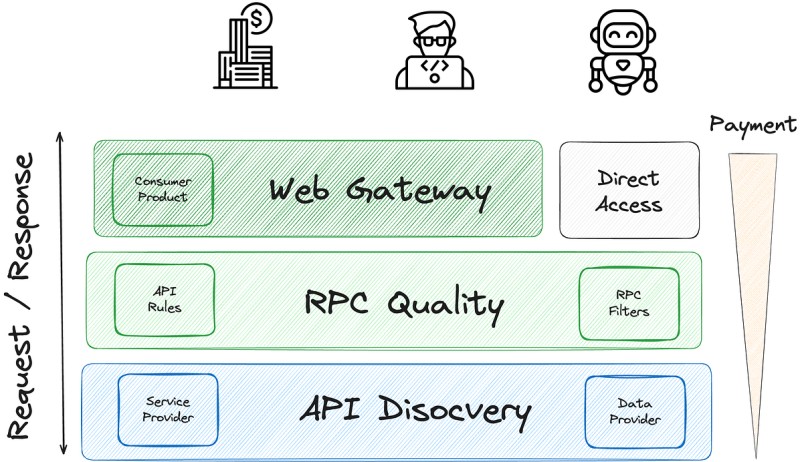
Daniel Olshansky describes an API marketplace as a "Google home page" for APIs. Two core primitives needed: API discovery and RPC quality. Programs need to find data providers and technical specs for access. Weather app needs to know where to get data, what format, how to parse.
API discovery is finding an endpoint. Still ad hoc in 2025 - developers ask people, search Google, prompt ChatGPT. No consistent standard. RPC quality is whether a provider's data is reliable, performant, correct. SLAs exist but customers often just assume it works. No comparable standards for quality and correctness.
Pocket Network, PATH, and Grove
Three layers of the proposed system
- Pocket Network - public blockchain with built-in incentives for API discovery and metered payments
- PATH - open-source SDK for enterprise-grade quality on top of permissionless providers
- Grove - consumer-facing portal with trusted brand, support, and UI hiding complexity
Grove doesn't run backend infrastructure but delivers performance on par with centralized providers. Open-core model: Pocket and PATH provide open infrastructure. Grove supplies managed experience. Like Supabase on PostgreSQL - hides database details, lets nontechnical people and AI agents create databases easily. More than a dozen providers, 100+ developers, ~50 million requests per day. Technical foundation live.
Hybrid Cloud-Blockchain Applications
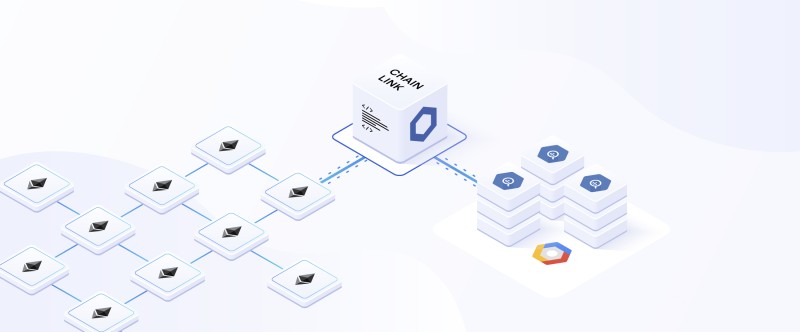
Google Cloud showed how to put BigQuery data on-chain through a Chainlink oracle. Smart contracts need external variables - oracles provide them. The architecture: Ethereum dApp requests data from Chainlink oracle, includes payment. Chainlink nodes listen, execute job. External adapters connect to authenticated APIs. Google App Engine retrieves data from BigQuery. Parameterized canned queries only - average gas price for a block or date. Oracle returns data, triggers dApp's downstream logic.
Applications include prediction marketplaces, futures contracts, transaction privacy. On-chain gas prices can create instruments paying holders when gas spikes. Block times and miner centralization are risks developers may want to hedge. Submarine sends for privacy - oracle expands operating scope to historical chain data, eliminates bloat. Trade latency for economic utility.
Chaos Ahead: A Trading Plan for the Coming Volatility
Advertising Marketplaces

Coinzilla runs a two-sided ad marketplace connecting advertisers with publishers and media properties. Services include campaign launching, audience connection, Web3 advertising, retargeting. Pre-built packages for reach and impact. All-in-one marketplace for crypto press releases across leading sites.
Case studies show the numbers: Stake hit 45M+ impressions. Bitget grew 120% in a month. ChainGPT strengthened Web3 presence. Trakx got massive brand exposure. Gamdom hit 49.5M impressions. Shieldeum got strategic launch results. Editorial covers first-party data, privacy, post-cookie advertising, publisher payments, card deposits, MiCA-related USDT payouts, bridging Web2 and Web3 marketing.
Loyalty and Rewards Marketplaces
Augeo built Heaps - an integrated crypto platform for consumers, employees, and members in loyalty programs. Developed with Prime Trust. Lets users buy crypto with points or cash, store in secure wallet, track portfolio, learn, earn crypto in marketplace, research coins. Organization benefits: attract crypto-curious customers, revenue from points-to-crypto fees, increase spend through crypto rewards. Consumer benefits: enter crypto with loyalty points, potential appreciation, crypto-back rewards stacking on card programs, learn and earn in one platform.
Rewards create a compelling entry point for consumers getting into cryptocurrency.
Augeo cites 881% adoption increase (CNBC 2021), 300M global users (Gemini 2021), 50M+ Americans expected to buy crypto (Ascent 2021). Their approach: don't force loyalty into existing crypto marketplace. Bring a crypto exchange into a loyalty marketplace through one integration.
Global Payouts and Creator Infrastructure
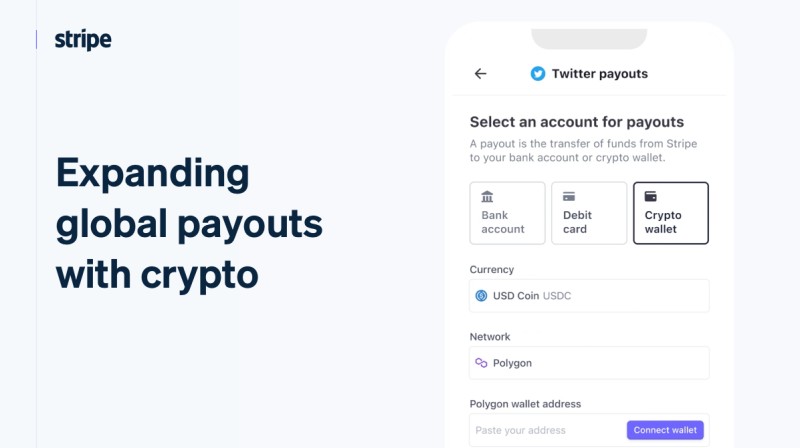
Stripe launched crypto payouts through Connect. Creators, freelancers, sellers, solopreneurs - easy to find customers, hard to get paid outside major markets. Connect sends payouts to 70+ countries in local currencies. Some countries still out of reach - heterogeneous, complex local payment systems. Stripe views crypto as open-access global financial rails.
Twitter was first platform partner. Creators could opt in for earnings paid to crypto wallet. Stripe handled complexity. No code changes for platforms. USDC on Polygon - low fees, speed, Ethereum integration, broad wallet compatibility (MetaMask, Coinbase Wallet, Rainbow). Creators hold on Polygon or bridge to Ethereum. Stripe planned 120+ countries by end of 2022.
What to Compare Before Choosing
So you're looking at a trading platform for cryptocurrencies or maybe an NFT shop or a payout rail. The label "crypto marketplace" covers too much ground. Here's what I'd compare.
Questions that actually matter
- What unit is being exchanged - coins, NFTs, data, ad space, points, bets?
- Who controls the rules - smart contracts, a company, a payment processor?
- Where does state live - on-chain, centralized database, hybrid?
- How do you discover providers - search, directory, API registry?
- How is quality established - reputation, SLAs, on-chain verification?
- How are payments settled - on-chain, off-chain, stablecoin, fiat rail?
- What fees apply - trading, gas, platform commission, spread?
- What onboarding or identity checks - KYC, none, tiered?
- Do you control keys or does the platform display assets for you?
- What happens when the platform removes something - does it disappear from your view?
The best websites to trade crypto aren't necessarily the ones with the most volume. The top rated crypto exchanges for spot trading might be terrible for NFTs or payouts. A kraken cryptocurrency exchange experience differs from a crypto com app experience differs from a decentralized marketplace where you hold keys but rely on Infura to read the chain.
If you're a creator, you care about payout rails - Stripe Connect with USDC on Polygon might beat traditional banking. If you're a brand, you care about loyalty integration - Heaps bringing exchange into rewards. If you're a developer, you care about API discovery - Pocket Network and Grove solving the "Google for APIs" problem. If you're an advertiser, you care about impressions and retargeting - Coinzilla's two-sided marketplace.
The best trading platforms for cryptocurrencies for you depends on what job you're hiring the marketplace to do. Don't pick based on the label. Pick based on the mechanics.
The label tells you almost nothing about what you're actually using.

Comments on “How Crypto Marketplaces Work and What You Should Compare Before Choosing”
No comments yet. Be the first to share your thoughts.