
Best Cryptocurrency Miner Software for Home Mining Compared for You
Choosing the Best Cryptocurrency Miner Software
I've spent time testing and comparing mining software, and the best cryptocurrency miner isn't just about raw hashing power anymore. These days it comes down to whether the software adapts to profit shifts automatically, handles your hardware without constant babysitting, and - maybe most importantly - doesn't leave backdoors for someone to secretly mine on your rig.
Let's get real about mining crypto first. You're running computations to help secure a network and earn rewards. Simple in theory, brutal in practice. Electricity eats into profits fast. Coin prices swing wildly. And the best mining software automates what it can - algorithm switching, performance tuning, coin selection - so you're not glued to a dashboard all day.
If you're thinking about getting into mining , I'd point you at two names that have stuck around since 2015: NiceHash and AlethOne. Neither is perfect, but both solved real problems when mining setup was a nightmare of configs and command lines. Since then, the whole game shifted. GPU shortages, AI demand spikes, and coin volatility made smart software more critical than hardware.
Most beginners fixate on GPUs. But your software decides which coin you mine, when you switch, and how efficiently you squeeze profit. That's why picking the right miner matters more than you think.
VoskCoin Runs Solo BTC Mining Numbers for 2026
NiceHash Miner for Windows
NiceHash earned its reputation as the easy entry point for home miners. The software launched in 2015 with one clear mission: turn your PC into a mining machine without the technical headaches. It targets Windows and supports both CPU and GPU setups out of the box.
Here's what NiceHash does differently from most miners. Instead of asking you to pick a coin and pool manually, it manages everything through its marketplace. You're essentially selling your hashing power to buyers who use it to mine different cryptocurrencies. The setup process was straightforward from day one: download the miner, run the built-in benchmark, enter a Bitcoin wallet address, and start mining.
The software automatically tunes your hardware for performance and efficiency, then switches algorithms based on what's most profitable in real time. This "best-profit" model depended on the prices flowing through the NiceHash exchange at any given moment. For actually getting started , it removed the guesswork.
I like that NiceHash handles what is crypto mining behind the scenes. You don't need to understand every algorithm or track coin prices constantly. The interface shows you exactly what's running, your earnings, and your hardware status. The source code is available too, which adds transparency.
NiceHash Miner capabilities
- Automatic tuning for performance and efficiency
- Automatic selection and runtime switching to the most profitable algorithm
- Built-in benchmark tool
- Choice of mining-server location
- CPU and GPU support
- Bitcoin wallet address entry for payouts
- Detailed application options and source-code availability
But there's a real trade-off. Your profitability depends on the NiceHash marketplace, not direct coin rewards. When demand is high, you earn more. When it dips, so do your returns. This model works great for beginners, but serious miners often want direct pool control. Still, if you want to start crypto mining without drowning in configs, this remains my top recommendation.
New ASIC Promises $6.11 Daily After Power Costs
AlethOne for Ethereum Mining

While NiceHash targets general-purpose mining, AlethOne carved out a niche for Ethereum back in 2015. Ethereum was new then, and mining setup was a mess of command-line tools and config files. AlethOne solved that with a clean two-button interface - one to start mining through your GPU, another to deposit rewards into your wallet.
The Ethereum Foundation distributed AlethOne through its Turbo Suite, a collection of tools built by the C++ development team. Setting up required the Ethereum Wallet first - a multi-platform app for holding ether, creating accounts, and managing contracts. Creating an account needed a strong password.
For testing, you switched the wallet to the testnet and selected "start mining" from the develop menu. After a few minutes, your test account had enough ether to run example contracts. The wallet's testnet mining was basic though - for the live Ethereum network, AlethOne was the more capable GPU-mining tool.
AlethOne represented a cleaner approach to mining crypto meaning. Instead of juggling pools and configurations, you focused on what mattered: your hardware running and earning rewards. The no-code token workflow showed how mining fits into the broader ecosystem. You could create tokens representing coins, loyalty points, or tradeable goods without writing code directly.
The Economics of GPU Mining
The mining landscape shifted hard after the early boom years. Coins come and go, algorithms change, and what was profitable yesterday loses money tomorrow. A recent case study with the Pearl Network showed how quickly GPU economics can flip - and why I always tell people to check returns before buying gear.
Pearl introduced Proof-of-Useful-Work, which uses matrix multiplication instead of conventional hashing. The network launched with mining limited to Nvidia hardware. When AI cloud providers partnered with the project, GPU miners rushed in to grab a piece.
The result was predictable and brutal. More hashing power meant higher difficulty and lower per-card returns. Daily revenue for top-tier cards dropped nearly 50% as the network filled up with rented cloud GPUs. The same pattern repeats across coins - chasing the hottest coin only works if the math still pencils out.
Pearl mining constraints
- Block reward that only declines over time
- Thin liquidity on smaller exchanges
- Continued growth in network hashrate
- Official pool optimized for datacenter silicon, not consumer cards
- Rented cloud GPUs competing with local hardware
The lesson is simple: profitable mining demands constant calculation , not coin hype. If the numbers don't work on your current hardware, they won't magically improve after you spend money on upgrades. I've seen too many people buy $3,000 rigs chasing a coin that tanks in price two weeks later.
Red Panda Mining Ranks Five Home ASICs Head-to-Head
Mining Software as a Security Target
Here's where things get serious. The mining landscape attracts attackers like moths to flame. Every security report I've read shows the same pattern: breaches ending with a miner as the final payload. Why? Because mining is easy money.
You don't need to encrypt files or hold data hostage. You just install a miner and let it run quietly in the background. Rising cryptocurrency values make this even more attractive to financially motivated attackers. The Red Canary research was clear: attackers were seeing a noticeable increase in miners delivered through automated attacks.
Crypto mining became a more common payload alongside ransomware. Botnets deploy miners at scale now. The economic incentive drives behavior - attackers don't even need admin access. Just the ability to execute code is enough to start mining on someone else's hardware.
"Miners could become a more common payload alongside ransomware and other methods used to obtain money quickly."
LibMiner and Container-Based Attacks
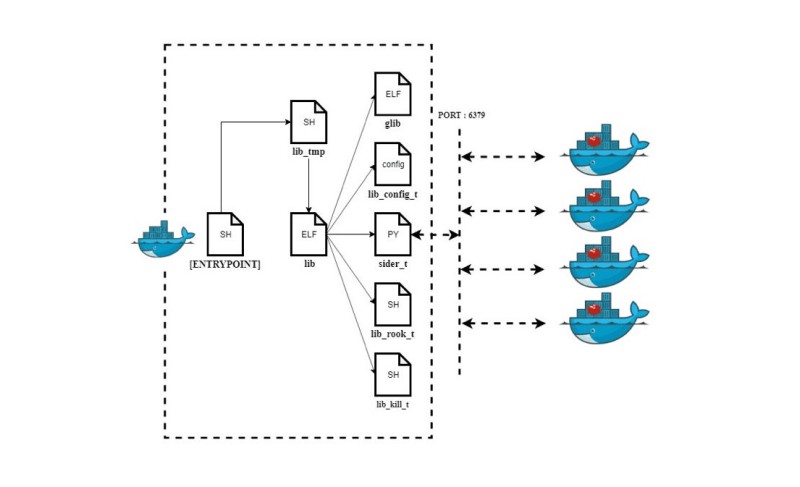
LibMiner showed how container environments become attack vectors. The malware targeted Docker setups running Redis without authentication - a surprisingly common misconfiguration. It was an ELF binary packed with UPX, designed to persist and evade detection across container restarts.
Here's how the attack unfolded. A compromised container started with a shell script that scheduled cron jobs, reset DNS settings, and downloaded the next stage. The script checked for cloud security tools - Tencent Cloud Aegis and Alibaba Server Guard - and killed their processes to clear the runway.
The malware then downloaded a packed binary, saved it under a random name in /var/lib, and made itself persistent through a systemd service called symcfget. This service pointed to a copy in /usr/bin, ensuring the miner restarted even after reboots.
The Redis lateral movement expanded the search beyond containers to any Linux system exposing port 6379 without protection. The script brute-forced IP ranges, connected to unprotected Redis instances, and tried to write persistence files through Redis save operations.
LibMiner attack components
- lib_tmp - initial shell script that starts the attack chain
- glib - XMRig binary that mines Monero
- lib_config_t - decoded configuration with pool domain and wallet address
- sider_t - Python script for Redis lateral movement
- lib_rook_t and lib_kill_t - cleanup modules that erase evidence
- lib_boot_t - shell script that downloads the newest LibMiner binary
The Monero wallet address collected up to 40 XMR over six months - roughly $2,146 at the time. The malware connected to pool.minexmr.com on port 443, routing through encoded commands to avoid detection. LibMiner also used anti-analysis tricks: process ID changing, immutable file attributes, and short console timeouts.
Docker API Exposure and Tor-Based Mining
A campaign combining exposed Docker APIs with Tor networks demonstrated how attackers hide their infrastructure while deploying miners. The attack began with a simple request to a misconfigured Docker Remote API - the same interface the Docker CLI uses to manage containers.
The attacker created a container using the Alpine image and mounted the host root directory inside it. This gave full read-write access to the host system. The payload was Base64-encoded and piped through Bash to avoid string-based detection.
Inside the container, the script installed Tor and torsocks, then fetched a script called docker-init.sh from a hidden.onion server. This script modified the host's sshd_config to enable root login and appended an SSH key to authorized_keys - creating persistent backdoor access.
The command-and-control beacon sent the victim's IP address and system architecture to an.onion domain over Tor. This confirmed the machine was compromised before the real payload dropped.
The payload came as a Zstandard-compressed binary tailored to the target's architecture. After decompression, it ran an XMRig dropper that contained the miner, wallet address, pool URL, and command-line arguments all in one package.
Docker API attack indicators
- Exposed Docker Remote API at tcp://0.0.0.0:2375
- POST request to /containers/create with host root mount
- Base64-decoded payload piped through Bash
- SSH key appended to /hostroot/root/.ssh/authorized_keys
- torsocks downloading from.onion domains
Protection starts with treating the Docker API as an internal service only. Never bind it to public interfaces unless absolutely necessary and properly secured. Use firewalls, mutual TLS, and never run containers as root unless you have no choice.
DarkGate: When Mining Meets Ransomware DarkGate was a Windows malware campaign distributed through torrent files posing as popular movies. The malware could mine crypto, steal wallet credentials, deploy ransomware, provide remote control, and log keystrokes - a full toolkit for financial exploitation. The command-and-control infrastructure used DNS records designed to resemble legitimate services like Akamai CDN and AWS. This made malicious traffic blend in with normal activity. DarkGate also used vendor-specific antivirus checks, process hollowing, recovery-tool evasion, and two User Account Control bypass techniques. What set DarkGate apart was its human-operated C2 system. Operators received notifications when new infections exposed cryptocurrency wallets. When they spotted interesting activity, they could install customized remote-access tools for manual control. In one research case, an operator deployed customized ransomware within minutes of noticing the infection. DarkGate capabilities Mine cryptocurrency through hollowed systeminfo.exe process Steal cryptocurrency wallet credentials from foreground windows Deploy ransomware on demand Provide remote control via installed backdoors Log keystrokes and capture clipboard contents Steal browser credentials, cookies, and history Delete system restore points The malware monitored foreground window names for strings tied to specific exchanges - Binance, HitBTC, KuCoin, MetaMask, and others. A match triggered an immediate report to the C2 server. DarkGate also checked for recovery tools like AdwCleaner and FarBar Recovery Scan Tool, and if found, aggressively rewrote its files to survive deletion. "The malware's goals appeared to be financial, based on its mining, wallet-stealing, and ransomware functions." DevOps Tools Under Siege A broad cryptojacking campaign systematically targeted publicly accessible DevOps applications. The primary targets were HashiCorp Nomad, Consul, the Docker API, and Gitea. These tools power modern infrastructure, and when exposed without protection, they're wide open. The attacker avoided custom malware entirely. Instead of building unique payloads, it downloaded standard XMRig releases from public GitHub repositories. This "living-off-open-source" approach simplified some detections while making it harder to cluster activity around custom indicators. The attacker needed only a mining wallet address to change campaigns. Nomad exploitation was straightforward. Without ACLs configured, any user with API access could create and run jobs. The attacker submitted tasks with random names and used shell commands to install XMRig from GitHub releases. The command connected to the SupportXMR pool over TLS with a hardcoded Monero wallet address. Gitea suffered from multiple vulnerabilities. Older versions allowed authenticated RCE through CVE-2020-14144 when git hooks were enabled by default. Version 1.4.0 had an unauthenticated RCE through path traversal that let attackers forge admin sessions. Even Gitea 1.13 - which fixed the default - remained vulnerable if an administrator manually re-enabled hooks. DevOps attack surface HashiCorp Nomad - unrestricted API allows job submission without ACLs Gitea - git hooks enable RCE, unauthenticated RCE in 1.4.0 Consul - health checks execute Bash commands remotely Docker API - exposed REST interface grants container creation Consul health checks were particularly dangerous. A service health check could include a Bash command executed by the registered agent. Without ACLs enabled, a remote user registered services with random names and used health check commands to download and run XMRig directly. Cloud exposure was significant. Over a quarter of all cloud environments contained at least one of these four technologies. Half of Docker deployments existed in cloud environments. And 5% of environments using these DevOps tools exposed them directly to the internet - 30% of those were misconfigured. DevOps protection measures Implement ACLs to deny unauthenticated access to Nomad jobs Keep Gitea instances updated and disable Git hooks unless necessary Implement Consul security model and restrict HTTP API to localhost Treat Docker API as internal service, never expose to internet Azure Linux Mining Scripts Linux mining scripts on Azure showed how attackers exploit internet-facing services directly. Instead of brute-force discovery, the scripts executed attacker code through compromised services - web apps, databases, and management interfaces with known vulnerabilities. The initial entry was an echo command piping Base64 through bash - a pattern that's become a red flag for incident responders. The decoded command added common system binary directories to PATH, then kicked off the infection chain. Most scripts started with the same two operations: redirecting output to /dev/null and extending PATH. Lateral movement used SSH discovery combined with passwordless connections. Scripts searched.bash_history, /etc/hosts, and.ssh/known_hosts for IP addresses, then attempted root and current-user connections. The xssh function disabled strict host-key checking and used a five-second timeout. Defense evasion was aggressive. Scripts deleted files after execution, modified permissions, and attempted to uninstall Alibaba Cloud Security Server Guard and AliCloud CloudMonitor. One pattern created a randomly named file from date and md5sum output, downloaded an executable, ran it, and deleted it - leaving minimal traces. Persistence came through systemd services and cron jobs. One script created /lib/systemd/systemd-ntpdate with an embedded Base64-encoded second-stage payload, then scheduled it through /etc/cron.d/0systemd-ntpdate. The files were timestamped to match legitimate system files using touch -r. Azure mining hunting indicators Unexpected connections to Tor and onion sites Unexpected SSH connections between internal hosts Base64 commands echoed and piped into Bash wget inside cron jobs Unexpected systemd services Mining objectives prioritized speed. After initial access, scripts attempted to leverage management tools - Ansible, Knife, Salt - to push miners across all connected systems simultaneously. The mining payload started as early as possible to maximize resource hijacking before detection. ASIC vs GPU Mining Hardware I need to talk about hardware here, because it directly affects your software choice. ASIC miners - application-specific integrated circuits built for crypto mining - deliver massive performance for specific algorithms. But they're single-purpose. When the algorithm changes or a coin pivots, your expensive rig becomes a paperweight. GPU rigs offer flexibility. They handle multiple algorithms and can switch coins. But they're less efficient per watt against modern ASICs. The fundamental question is risk tolerance. If you're mining one coin long-term, an ASIC might make sense. If you want to chase profits across coins, GPUs give you that freedom. For the best crypto to mining, you need to track which coins support your hardware. ASICs dominate SHA-256 Bitcoin mining. GPUs excel at Ethash and other memory-hard algorithms. The most profitable crypto mine today might switch algorithms tomorrow. Here's the thing: smart software matters more than raw hardware. Good mining software adapts to market conditions faster than you can. It optimizes your hardware, manages payouts, and - increasingly - keeps your system secure from the threats I've outlined above. ASIC vs GPU comparison ASIC - maximum performance for single algorithm, becomes obsolete when algorithm changes GPU - handles multiple algorithms and coins, less efficient per watt but more flexible ASIC - single-purpose hardware, no resale value beyond original coin GPU - multi-purpose, resale value for gaming or AI workloads ASIC - high upfront cost, specialized power requirements GPU - modular, can expand or reconfigure based on profitability Hardening Your Mining Operation Let's talk about securing your mining setup. The threats I've covered aren't theoretical - they're actively exploiting misconfigured systems right now. Every exposed API, every unprotected Redis instance, every torrent download is a potential entry point. The attack surface keeps growing. Docker APIs, Redis servers, Nomad schedulers, Gitea instances, and exposed management interfaces - attackers scan for all of them constantly. What's clear from the research is that most attackers don't need sophisticated exploits. They just need misconfigured defaults. For LibMiner-style attacks, the fix starts with protecting Redis. Enable authentication, run in protected mode, and never expose it to the public internet. The same applies to Docker APIs - bind to localhost, require TLS, and restrict access to trusted networks. Container security requires constant vigilance. Check open Docker hosts, review container pipelines, and use runtime protection. For exposed APIs, implement ACLs, enable mutual TLS, and treat every endpoint as a potential attack vector. The pattern is always the same: unprotected access leads to container creation, which leads to mining. Hardening best practices Use vulnerability management to find exposed Redis and Docker APIs Keep host packages and applications updated Run Redis in protected mode with authentication enabled Restrict root access and prevent external client access Implement ACLs on Nomad and Consul to prevent unauthorized job submission Disable Git hooks in Gitea unless absolutely necessary Monitoring proves just as important as prevention. Watch for unexpected outbound connections to onion sites, base64 commands piped through bash, and sudden spikes in CPU usage. The Azure Linux scripts left clear traces: repeated PATH extensions, file deletions, and cron installations. "Unauthorized miners only need the ability to execute code. They don't need admin access - just an open door." I'll leave you with this. When I think about the best cryptocurrency miner, I don't just mean software. It means software that stays running, stays profitable, and stays secure. NiceHash wins on ease of use. AlethOne wins for Ethereum-specific workflows. But none of it matters if your system gets compromised while you sleep. The threat landscape evolved faster than most home miners realize. What started as simple wallet-stealing malware now includes human-operated ransomware deployments, container escape techniques, and living-off-open-source attacks. The attackers aren't just opportunists anymore - they're systematic. My advice: start small with NiceHash to learn the ropes, then graduate to pool-direct mining once you understand the economics. Use AlethOne if you're committed to Ethereum. And above all, secure every exposed service before flipping the switch. Your electricity bill isn't the only thing at stake when your rig gets co-opted. Mining Pool Security Features The best mining software now includes security considerations alongside profitability metrics. NiceHash's marketplace model provides some isolation - you're not directly connecting to external pools that might host malicious binaries. AlethOne's tight integration with the Ethereum Wallet reduces attack surface by consolidating credentials. But when you move to direct pool mining, you trade convenience for risk. You're downloading binaries from pool operators, configuring connections manually, and managing your own wallet integrations. The security research across Docker, Redis, and DevOps tools confirms a harsh reality: any additional access point increases vulnerability. Modern miners need to think like system administrators, not just profit chasers. Port forwarding rules, firewall configurations, and API endpoint exposure all matter when attackers scan thousands of systems per day. The difference between a profitable rig and a compromised host often comes down to whether port 2375 or port 6379 is reachable from the internet. Secure mining checklist Firewall all management ports except from trusted IPs Enable authentication on every service before exposing it Verify miner binary checksums before execution Monitor outbound traffic for unexpected connections Schedule regular security scans of all exposed endpoints The economics still favor the attackers. They only need one vulnerability to install a miner across your entire GPU farm. You need to secure every entry point perfectly. That's why I recommend starting with software that handles both mining and security out of the box - NiceHash's closed marketplace model isn't perfect, but it removes several attack vectors by design. "AI mining is real now lmao - computation has utility only when someone pays for its result." The Pearl Network case study drove this point home. AI-shaped proof-of-work sounds appealing, but most mining still routes through rented cloud cards rather than meaningful paid AI work. The same applies to your home rig - if you're not securing your system, someone else is mining on it for free. This is where the conversation about "how to mine cryptocurrencies" needs to expand beyond just setup guides. Every tutorial that says "download this miner and click start" should come with a warning about exposed APIs, unsecured Redis instances, and the very real threat of your rig getting co-opted the moment you connect it to the internet. "The ability to execute code is enough to start a miner. You don't need administrator access." Profit Calculation and Cost Analysis Let's be brutally honest about profitability. The best cryptocurrency miner won't make you rich if your electricity costs exceed your mining rewards. I've watched too many people buy rigs, factor in only hardware costs, and forget the monthly power bill. Here's the calculation that matters. Take your GPU's hash rate, multiply by the current network difficulty and coin price, then subtract electricity costs. If the result is negative, you're mining at a loss. Simple math, but shockingly few miners check it before flipping the switch. The Pearl Network crash showed how fast things can change. Miners were earning solid returns based on initial projections. Then cloud capacity flooded the network, difficulty spiked, and daily earnings for RTX cards dropped almost 50%. Those who bought gear based on early numbers took serious losses. ASIC miners face similar risks. Bitcoin's algorithm doesn't change, but the hardware becomes obsolete when newer, more efficient models drop. A miner that was profitable yesterday faces diminishing returns when the next generation hits the market at double the efficiency. I track three numbers before any major purchase: current break-even cost per day, projected difficulty adjustments, and coin price volatility over the past month. If any of these trends point toward losses, I wait. The best crypto to mining changes with market conditions, and so should your hardware strategy. Mining profitability factors Electricity cost per kilowatt-hour in your region GPU or ASIC purchase price and depreciation Coin price volatility over the past 30 days Network difficulty trends and expected adjustments Payout frequency and minimum withdrawal thresholds "If the math doesn't work on your current hardware, it won't magically improve after you spend money on upgrades." The cloud mining rush on Pearl illustrated this perfectly. Rented cloud GPUs filled the network faster than local hardware buyers could deploy new cards. The miners who committed capital to physical gear watched their returns evaporate while cloud providers switched to more profitable workloads. Final Thoughts on Miner Selection Choosing the best cryptocurrency miner comes down to three factors: ease of use, profitability, and security. NiceHash wins on ease. Pool-direct mining wins on potential profitability. But security - protecting your investment from attackers - that's entirely on you. I started with NiceHash myself. The automatic algorithm switching and built-in benchmark saved hours of configuration headaches. But as I learned more about the attack surface, I realized convenience has a cost. Every exposed service, every unnecessary port, every default config is a potential entry point. The threat research is consistent across every major campaign. Attackers target the same misconfigurations: Docker APIs on port 2375, Redis on 6379, Nomad schedulers without ACLs. They don't need zero-day exploits - just default settings and internet exposure. My recommendation for anyone thinking about how to mine cryptocurrency: start with NiceHash to learn the ropes safely. Once you understand the economics and risks, graduate to more advanced setups. But always - always - secure every exposed service before you flip the switch. Your rig isn't just earning coins while you sleep. It's a target. Getting started roadmap Start with NiceHash for automated, marketplace-based mining Learn coin economics and profitability calculation Secure all home network services before expanding Transition to pool-direct mining once comfortable Monitor for unusual network activity daily The landscape keeps evolving. New coins emerge, algorithms shift, and attackers adapt. But the fundamentals remain the same - protect your hardware, calculate your costs, and choose software that matches your skill level. The best cryptocurrency miner isn't the fastest or most profitable. It's the one that stays running and keeps your system secure. Staying Ahead of Mining Threats The attack campaigns I've covered - LibMiner, DarkGate, Docker API exploits, DevOps targeting - all share a common pattern. Attackers follow the path of least resistance. Exposed APIs, unauthenticated services, and default configurations are their entry points. What's changed since the early days of mining malware is sophistication. These aren't script kiddie operations anymore. Human operators monitor infections in real time, deploy custom payloads, and pivot between mining, ransomware, and credential theft based on what's most profitable for each target. The DevOps targeting campaign was particularly telling. Instead of building custom malware, attackers downloaded standard XMRig releases from GitHub. This "living-off-open-source" approach makes attribution nearly impossible and reduces the footprint of unique indicators. They only needed a wallet address to swap coins. Monitoring and response matter more than prevention alone. Every unexpected outbound connection, every base64 command at your shell, every newly created cron job deserves investigation. The Azure Linux scripts left clear traces - PATH modifications, file deletions, service installations - that security teams could detect with proper monitoring. Detection priorities Unexpected base64 commands piped to bash New systemd services in non-standard locations Outbound connections to onion and Tor domains SSH key additions to authorized_keys files "Miners could become a more common payload alongside ransomware and other methods used to obtain money quickly." I'll leave you with one final thought. The best cryptocurrency miner software protects your investment as much as it maximizes your profits. In today's threat landscape, that security isn't optional - it's the difference between earning coins and losing your entire rig to attackers.



Comments on “Best Cryptocurrency Miner Software for Home Mining Compared for You”
No comments yet. Be the first to share your thoughts.