How Blockchain Wallets Work and Help Keep Your Crypto Safer

How Blockchain Wallets Work and Help Keep Your Crypto Safer
Here’s the simple bit: a blockchain wallet does not hold the coins . It holds or manages the keys tied to blockchain addresses. The coins, tokens, balances, ownership records, and transfers live on the ledger. When people ask for a wallet for cryptocurrency , they’re really choosing who can use those keys and how the app gets data from the network.
It does not store the coins or tokens themselves.
Think of an address as a labeled mailbox, the private key as the key inside it, and the signature as a signed approval. On a public blockchain, the mailbox and ledger can be seen by others; the private key should not be. A wallet file, seed phrase, or hardware device is not the crypto itself. Get that wrong, and the loss can be permanent.
Crypto Wallets Explained: Beginner Walkthrough With Rabby Demo
Keys, Seed Phrases, and Addresses
A private key gives its holder the power to sign for a blockchain account. A seed phrase, also called a mnemonic, can rebuild key material if the original private keys are gone. The wallet then uses those keys to derive or manage addresses. An address tells others where to look for an account and where assets should be sent.
The main parts of a blockchain wallet
- A private key signs for its related blockchain account.
- A seed phrase can recover the key material behind a wallet.
- An address is a public sending and receiving label.
- A signature shows that the matching key approved a transaction.
- Wallet software connects those secrets to addresses and ledger data.
Losing the seed phrase can mean permanent loss of access. Showing it to the wrong person can give that person control. It is not a username or ordinary account ID. A password reset may not rescue a wallet, so I would read the recovery plan before adding any money.
How a Crypto Transaction Moves
A wallet does more than press “send.” It builds the payment details, signs them, sends the signed record to the network, and checks what happens next. The payload can include the recipient, amount, asset, network fee, nonce or sequence value, and chain-specific conditions. The private key signs that payload without revealing the private key itself.
The transaction path
- The user enters or confirms the payment details.
- The wallet assembles a chain-specific transaction.
- The matching private key signs it.
- The wallet broadcasts the signed transaction.
- Blockchain nodes check it against the chain's rules.
- The wallet tracks block inclusion, confirmations, and final status.
A transaction signature does not by itself establish that the recipient is safe, that the user intended every detail, or that a smart contract will behave as expected.
That last part matters. “Submitted” does not mean “finished.” A transaction can wait for network delivery, block inclusion, more confirmations, or a chain's final state. Some delays also come from data indexing. A good wallet keeps those states separate, while a poor one may make a pending payment look final.
What a Blockchain Wallet Address Does
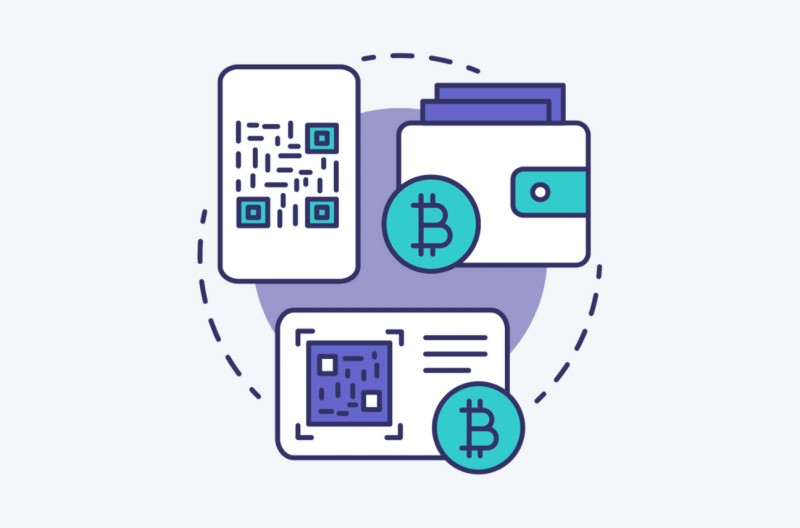
The what is a wallet address for crypto question has a short answer. An address is a public account label used to receive, identify, and send blockchain assets. The coins are not sitting inside the address itself. Records tied to that address show ownership, balances, and transfers on the relevant ledger.
Address checks before sending
- Confirm the network.
- Compare the full address, not just its first and last few characters.
- Confirm the asset and any token contract address.
- Check the amount and network fee.
- Review any special smart-contract conditions.
A blockchain wallet QR code can cut down on typing errors, but it still needs the same checks. On Ethereum, one address can hold ETH, ERC-20 tokens, ERC-721 NFTs, and ERC-1155 tokens. A sound wallet must show the network and contract details, or a token name can create false confidence.
SafePal Ecosystem Walkthrough: Mobile, Extension, Hardware
Wallet Formats
Cryptocurrency wallet software comes in many forms because people want different mixes of access, control, and ease. Some wallets hold keys on a phone. Others isolate signing on a dedicated device or send keys to a service that manages them. The label on a download page tells you very little until you know who controls the keys.
Common wallet formats
- Software wallets run on computers or phones.
- Mobile wallets use smartphone apps.
- Web wallets run in a browser.
- Browser extensions connect with web apps and dApps.
- Hardware wallets isolate signing on a dedicated device.
- Cold wallets keep keys away from an internet connection.
- Hot wallets connect through phones, browsers, or desktop apps.
- Embedded wallets sit inside another product.
- Multi-signature wallets need more than one approval.
- Paper wallets encode key information for offline storage.
There is no best beginner crypto wallet for every person. A simple phone wallet may suit one person who values easy access. A hardware or offline setup may suit someone who wants fewer online links. The right question is which risks you understand and can control.
Hot Wallets, Cold Wallets, and Hardware
Hot wallets connect to the internet through a phone, browser, desktop program, or extension. That makes them easy to use, but it gives attackers more paths to reach the device, app, browser, network, or connected service. Cold wallets keep keys offline. Hardware wallets take another route by isolating signing on a dedicated device, though the device still depends on the computer or phone beside it.
Three wallet profiles
- Hot wallets favor ease and expose keys and signing operations to more connected systems.
- Cold wallets reduce internet exposure but can be harder to set up, use, and recover.
- Hardware wallets isolate signing, but companion software and input devices still matter.
A search for how to make a paper wallet often makes the format sound simple. The source behind this topic says paper wallets encode key data for offline storage but does not recommend them. The paper wallet private key is still a private key, and a person can copy or transcribe it without software checks. Hardware storage is not self-custody by itself either, because a browser, operating system, extension, or app can still expose signing. A “brainwallet” based only on memory is worse; human memory is not a sound key store.
Custody Is More Than a Label
Custody can mean a legal duty, a technical setup, or both. A self-custody wallet gives the user key control. Shared custody splits control among several parties. Delegated custody gives an outside party control. Those words open the door, but they do not tell you where signing happens, who can change the rules, or who bears the legal responsibility.
Questions that expose real control
- Who has the legal right or duty to protect the assets?
- Who can create and access the private keys?
- Can one person move funds alone?
- How many approvals are required?
- Can approval rules or permissions be changed?
- Can another system export data or sign transactions?
- What recovery path exists after a lost device or key?
- Can law enforcement or a regulator compel access?
Custody is the legal right or duty to care for someone or something.
The label is not the whole system. A browser wallet still depends on a browser vendor, operating system, node service, and remote apps. A business setup can spread authority across hardware security modules, approval groups, people, and policies. Physical possession of a key gives technical power, but contracts and local law can decide who is responsible for it.
What a Blockchain Wallet Must Do
A wallet is not just a balance screen with a send button. It is a set of jobs: protect keys, build transactions, sign them, reach the chain, track the result, control access, and show useful warnings. One app may do all of that. A larger system may split each job among separate services.
Core parts of a wallet system
- Key management creates, stores, recovers, and uses keys.
- Node management handles chain connections and indexed data.
- Transaction building prepares payment instructions.
- Transaction management submits and follows payments.
- Policy rules set approvals and security checks.
- User management handles identities, devices, and roles.
- Entitlement management grants permissions to people and systems.
- Smart-contract support deploys or calls contract code.
- Third-party support links exchanges, merchants, and other services.
A phone app may keep keys and build a payment while a hosted node supplies ledger data. A hardware wallet may sign on its own screen while another app prepares the deal. An embedded wallet may sit behind a checkout page with no full app for the buyer. The source points to Fireblocks behind Revolut's crypto offer and DFNS in Stripe crypto transactions as examples of this hidden layer.
Nodes, Ledger Data, and Status Checks
A wallet needs a way to reach a blockchain node or gateway. It may also need indexed ledger data, which is chain information arranged for quick lookup. A self-managed system runs its own nodes and data setup. A managed system outsources some of that work, which can remove a lot of custom code but adds another service relationship.
The AWS wallet flow in the source
- A client calls a backend API.
- API Gateway and Lambda check access.
- Lambda asks Managed Blockchain Query for chain data.
- Query returns indexed information.
- Lambda changes the response into the form the user sees.
- Managed Blockchain Access can broadcast a signed payment to the chosen network.
That design keeps two jobs apart: sending a transaction and tracking it afterward. Its key options include AWS CloudHSM for protected hardware and AWS Key Management Service for cloud key storage. Calls such as token-balance, transaction-list, transaction-detail, and token-balance-list queries give the app more ledger views. Even so, key control does not prove that every displayed API response is independently checked. The signing path and the data path are separate risk zones.
Cross-Chain Wallets and Token Identity
Cross-chain support turns a simple wallet into a hard systems problem. Each network can use different fees, signing rules, nonce or sequence values, confirmation rules, and smart-contract models. A wallet that works across chains must know which network each instruction belongs to before it signs.
Cross-chain checks
- The source and destination networks.
- The asset and token contract.
- The network fee for each chain.
- The signing method required by the account.
- The nonce or sequence value.
- The confirmation and replacement rules.
ZetaChain gives one real example of this goal. Its network is designed to connect Bitcoin, Ethereum, Cosmos, Solana, and other chains so apps can work across them. Chain abstraction can hide some plumbing, but it should not hide the facts that matter. A sound cross-chain wallet still has to show the network, asset, destination, fee, and contract before you approve anything.
Hot vs Cold Wallets: CoinGecko Breaks Down the Tradeoffs
Security Starts at the Edges
A blockchain wallet is a gateway to a public ledger, so its safety needs to match the value it can move. The risk is not just the private key. It is the whole path: the user, phone, browser, app, network, APIs, smart contracts, package managers, and outside services. Small flaws can join up and turn into one bad path.
Common wallet threats
- Phishing pages and fake wallet apps.
- Stolen seed phrases or private keys.
- Weak login and account recovery.
- Malicious or changed dApps.
- Clipboard and address replacement.
- Phone, browser, or operating-system compromise.
- Poor random-number or encryption code.
- Unsafe software packages and updates.
- Blind signing with unclear transaction details.
- Malformed transactions that waste node resources.
A crypto wallet is a gateway to blockchain ledgers.
The user remains part of the security line. An attacker may not need deep crypto skills if they can capture a password, seed phrase, address, or fake approval screen. The security review found eight to ten crypto-specific problems in each wallet it assessed and found cases where weak choices worked as a set. It recommends proven libraries such as libsodium or Themis, careful package reviews, strong random-number sources, and fewer secrets left in memory, logs, or source files. Open-source code helps readers inspect a wallet, but attackers can study it too.
Mobile, Browser, and dApp Checks
Mobile wallet safety depends on the phone as much as on the wallet. A rooted or jailbroken device, malware, old operating system, weak app storage, or careless biometric setup can change the risk. The app should also ask for more proof before it reveals a seed phrase, changes security settings, approves a contract, or sends funds.
Checks for a mobile wallet
- Require a device passcode.
- Warn when the device is rooted or jailbroken.
- Use the phone's secure Keychain or Keystore.
- Add app-level encryption around sensitive data.
- Recheck biometrics after enrollment changes.
- Support maintained operating-system versions.
- Keep secrets out of logs and crash reports.
- Use step-up prompts for sensitive actions.
Browsers add their own line of risk. A fake page can replace a copied address, and a malicious extension can request broad power. When a wallet connects to a dApp, check the chain, contract, recipient, amount, fee, and token-spending limit. A QR code can make the address easier to compare, but it cannot tell you that the dApp or contract is honest. Session checks, clear approval screens, and support for refusing or replacing a request all matter.
Wallets for Teams, Shops, and Treasury
A personal wallet and a business wallet solve different problems. One person may care most about safe recovery. A trading desk, online shop, or corporate treasury needs roles, approval rules, monitoring, and records. The source lays out three clear cases.
Business wallet jobs
- A trading desk can use APIs for execution while risk and compliance teams approve larger transfers through a dashboard, with multi-party computation and passkeys controlling access.
- An online shop can place an embedded wallet at checkout and use smart-contract escrow to hold funds until delivery, with an arbitration contract for disputes.
- A corporate treasury can require a CFO and two board members to approve transfers over $500,000, with hardware signing and co-control around the approval.
The wallet-service test is broader than “custodial” or “non-custodial.” The source lists security, ease of use, recovery, programming access, setup choices, administration, compliance, speed, chain support, and cost. Key location can also matter under local law. Some services charge by assets, transactions, API calls, subscriptions, licenses, or setup work. A cheap wallet can still be poor if it cannot recover keys, explain approvals, or keep pace with the business.
Picking a Blockchain Wallet
When you ask how to get a wallet for cryptocurrency , start with the job, not the logo. A crypto account create flow should tell you who controls the keys, which networks it supports, how recovery works, and what fees may appear. Downloading an app is only the start. You still have to read its recovery and security details.
A plain wallet picking order
- Decide whether you want user, shared, or delegated control.
- Check support for the exact network and token you need.
- Find and test the backup and recovery path.
- Read how the wallet shows addresses, fees, and contract calls.
- Check outside security reviews, updates, and package health.
- Compare service fees, network fees, and recovery limits.
- For a team, test roles, approval rules, and audit records.
For one person, the wallet with the clearest recovery path may be enough. For a team, the winner needs stronger roles, limits, and approval records. Either way, keep the seed phrase offline and treat a public address as public information. Hey, don't skip this part: once a transaction is confirmed on a public blockchain, a wallet provider's support desk usually cannot reverse it. Prevention is the better system.
Comments on “How Blockchain Wallets Work and Help Keep Your Crypto Safer”
No comments yet. Be the first to share your thoughts.