
Roth IRA Crypto Accounts: Your Tax-Free Retirement Moonshot

Roth IRA Crypto Accounts Basics
You can hold crypto in a Roth IRA and keep every dime of upside from the IRS later. I call roth ira crypto accounts a tax-free retirement moonshot. The pitch is simple: hold crypto, let it rip, owe zero tax on gains when you retire. No finance degree required. The Roth wrapper is great for high-growth bets - if your coins pop, qualified withdrawals stay tax-free under U.S. law. I got into this after watching how much tax eats normal brokerage gains. Shielding crypto wins from the IRS was a light bulb moment.
Most folks learn the Roth IRA is a retirement account funded with after-tax money. The twist: you can put crypto inside it. Buy Bitcoin or Ethereum inside the account, the growth is shielded. I care about this because taxes eat so much of normal investing, and this is a rare free pass. You still follow IRS rules, but the core idea is easy to grasp. People worry it's too complex. It's not, if you take it step by step.

Some people ask what a Fidelity crypto account even is when they first look into this. Different product, but the core idea - holding coins in a retirement shell - is similar. Our focus stays on roth ira crypto accounts and how they work for regular people. I won't dive into other brokerage offerings; the Roth tax break is the star here. If you already have a normal crypto account, the IRA version just adds rules and a custodian.
The Mistake That Costs You $2.7 Million
What Is a Crypto IRA
Two main ways to get crypto inside an IRA. One: a self-directed IRA (SDIRA) where you pick the coins directly. Two: a crypto-ETF IRA that holds public crypto funds. Both are real IRAs, but custody and fees differ. Knowing the difference early saves headaches later.
Two paths to crypto in an IRA
- Self-Directed IRA (SDIRA) – IRS-approved account that lets you hold alt assets like crypto, real estate, private equity, metals. A custodian holds them but you direct trades.
- Crypto-ETF IRA – A normal IRA that holds traded crypto ETFs. Simpler custody, but you pay expense ratios and can only trade during market hours.
The SDIRA route gives you direct coins. The ETF route is easier for beginners. The choice depends on how much control you want and how much fee you can stomach. With SDIRA you tell the custodian what to buy; with ETF you own fund shares. Both can live inside a Roth, so the tax-free part stays the same. Read the fine print before you sign.
Roth vs Traditional vs SEP Crypto IRAs

Not all IRAs treat tax the same. Roth takes after-tax money up front, gives tax-free withdrawals later. Traditional may deduct now but taxes you on pull-out. SEP is for self-employed folks with bigger limits. Always check the tax treatment - it changes how much you keep.
Quick compare of account types
- Roth IRA – Contributions after-tax, qualified withdrawals tax-free, limit $7,500 plus $1,100 catch-up if 50+.
- Traditional IRA – Contributions may be deductible, withdrawals taxed as ordinary income, same limits.
- SEP IRA – Employer contributions deductible, withdrawals taxed, up to 25% of comp max $66,000.
Income phase-out ranges apply to Roth. Starts at $153,000 for single, $242,000 for married joint, with partial allowed up to $168,000 and $252,000. Many people miss the income cap and get surprised. Earn above those numbers, your contribution is limited or barred. The SEP path is sweet for freelancers who want crypto exposure with tax deferral now.
Funding Your Roth Crypto IRA
You can fund roth ira crypto accounts three ways. One: annual contributions subject to limits. Two: taxable conversions from pre-tax accounts like a traditional IRA or 401(k); you owe tax that year. Three: rollovers from another Roth account, tax-free, but only one per 12 months. I like options - not everyone has cash to contribute.
Ways to put money in
- Annual Contributions – Subject to limits and income rules.
- Taxable Conversions – Move pre-tax money, pay tax on conversion year.
- Rollovers – Transfer from Roth 401(k) etc, tax-free, one per year.
I like rollovers for folks who already have a Roth 401(k) from a job. Keeps things simple, avoids new contribution caps. Conversions are painful - you pay tax now - but if you think crypto booms, paying tax at today's rate may beat future tax on gains. Talk to a tax pro before big conversions.
Key Benefits of Roth IRA Crypto Accounts
The big draw is tax-free growth. Qualified Roth withdrawals dodge federal income tax. Huge for crypto - coins swing hard, gains can be big. You also get diversification; crypto often moves different from stocks. I sleep better knowing a small crypto bet won't wreck the whole plan.
Liquidity is another plus. Major coins trade 24/7, so you rebalance inside the account anytime. Some custodians give cold storage and insurance, so you skip personal key management. The dream of making money from cryptocurrency gets a tax break here if you play by the rules. No need to track cost basis for tax later - the Roth shell handles it.
Bitcoin's historical average annual return: around 49% over a ten-year span, not guaranteed. That shows why earning money with cryptocurrency inside a Roth feels like a cheat code. You keep all of it later. Past returns don't promise future, but the tax break is real law. Compound growth with no tax leak - that gets me excited.
Qualified Roth withdrawals are free of federal income tax.
Fidelity Crypto IRA: 1% Spread, Offline Wallets
Risks and Drawbacks to Watch
Crypto is volatile. Bitcoin moves 3-5% a day, altcoins 10-30% or more, stress events drop 50-90%. You don't control private keys with most IRA custodians, so platform failure matters. Always ask who holds the keys and what insurance exists. I hate lost coins - custody questions are top of my list.
Fees bite. Setup $0-$300, annual maintenance up to $350, trading 1-2%, storage 0.05-0.08% of assets. Platforms limit coins, block staking, restrict transfers. Don't confuse this with crypto high yield savings that promise interest; different product, not in an IRA wrapper. The IRA route is about price gain, not yield.
Main risks to note
- Market Volatility – Big daily swings and deep drops possible.
- Custody Risk – You don't hold keys, pool or segregate matters.
- Platform Restrictions – Limited menus, no staking, transfer caps.
- Regulatory Constraints – Personal use or lending triggers tax and penalties.
Most providers allow only major coins - BTC, ETH - excluding memecoins, NFTs, ICOs. If you chase the next best crypto , you won't find it inside these accounts. Fine for safety, limits upside chasers. Accept the limited menu to avoid rogue token traps.
The Venture Sleeve Approach
Treat crypto in a Roth as a small high-risk "venture sleeve," not a core hold. Allocate 1-3% of investable assets. Write clear rules and an exit plan on one page. Rebalance on a set schedule - quarterly is common. Keeps your retirement safe while letting you play the crypto game.
Avoid ad-hoc trades from social media hype. The sleeve keeps you sane when coins crash. You might wonder what the best cryptocurrencies are for this sleeve, but most stick to BTC and ETH for safety. I use the sleeve idea - it puts a fence around my urge to overtrade. Crypto flies, the sleeve adds joy; it tanks, the core stays intact.
Treat crypto within a Roth IRA as a small, high-risk “venture sleeve” rather than a core retirement holding.
Writing a Simple Crypto IRA Policy
A one-page policy keeps you disciplined. Include target allocation and hard caps. List approved assets - BTC, ETH, specific ETFs. Set rebalancing bands and trading windows. I wrote one for my notes; stopped me from panic selling.
What to put in your policy
- Target allocation and hard caps.
- Approved assets (BTC, ETH, certain ETFs).
- Rebalancing bands and trade windows.
- Custody details, insurance, distribution options.
Note contribution and conversion limits, fee estimates, cross-border issues if any. Some ask what cryptocurrency is best to invest in , but your policy should name exact coins to avoid drift. A signed policy makes you accountable. Mine sits next to my login info - mental anchor.
How to Pick a Crypto IRA Provider
When you search best crypto IRA accounts , you'll see many names. Evaluate total cost, custody details, execution quality, asset menu, reporting, cross-border service. Answers vague, walk away. Vague fee talk is a red flag.
I looked at crypto investment companies in the USA like ITrustCapital, Bitcoin IRA, IRA Financial, Swan Bitcoin, BitIRA. Each has trade-offs. ITrustCapital charges 1% trade fee with U.S. custodians. Bitcoin IRA supports 80+ coins. Swan focuses on BTC with hybrid self-custody. BitIRA gives insured cold storage. Right pick depends on your coin wish list.
Provider check list
- Total Cost Structure – setup, monthly, custody, trade, withdrawal fees.
- Custody Details – key management, segregation, insurance.
- Execution Quality – pricing sources, volatility handling.
- Asset Menu – available coins, transfer out, in-kind rules.
If any answer is vague, discontinue evaluation.
Operational Steps for Self-Directed IRA
The process is straightforward. Open an account with a crypto-friendly custodian. Fund it via transfer, rollover, or cash contribution. Approve a crypto exchange partner or fund manager. I did a dummy run on paper - felt like opening a normal brokerage.
Steps to buy crypto in SDIRA
- Open Account – Choose custodian that supports crypto.
- Fund the IRA – Transfer, rollover, or contribute cash.
- Select Provider – Approve exchange partner or manager.
- Purchase Crypto – Custodian trades for you, cold storage.
Then maintain compliance: file IRS Form 5498, annual valuations, avoid prohibited trades. Some want cryptocurrency funds Vanguard -style simplicity; a crypto-ETF IRA is closer to that. SDIRA needs more steps but gives direct coin ownership. Pick the path that matches your patience level.
Crypto IRA Versus Crypto ETF
Direct ownership: you own the coins and full upside, higher complexity. ETF exposure is simpler via any brokerage IRA, lower fees, but you own fund shares not coins, trading limited to market hours. Both valid for roth ira crypto accounts.
For roth ira crypto accounts, direct coins give more control. Hate operational hassle, the ETF path inside Roth still gives tax-free growth on crypto exposure. Neither is wrong. A friend uses ETF - doesn't want to call a custodian to trade. I like direct for the pure play.
Two Ways to Trade Crypto in a Roth IRA
Cross-Border Tips for U.S. and Canada
U.S. folks living in Canada must elect treaty treatment to defer Canadian tax on Roth growth. Custodians may restrict service based on residency. Verify long-term serviceability before moving. Pals up north - this matters a lot.
Cross-border checklist
- Determine tax residency and effect on rules.
- File one-time election under Canada-U.S. Tax Treaty Article XVIII(7).
- Verify custodian service for Canadian residents.
- Review estate planning and state inheritance tax (Iowa repealed its inheritance tax in 2025).
Important - pay attention if you plan to relocate. The treaty election is a one-time paper that saves pain. Some states still have inheritance tax, check beneficiary rules. Don't let border moves tank your tax-free plan.
Typical Fees You Will See
Fees vary, common ranges: setup $0-$300 one-time, annual maintenance up to $350, trading 1-2% per transaction, storage 0.05-0.08% of assets, valuation reporting up to $100 yearly. Accuplan example: $349.95 annual fee and 1% per transaction. I add these to a spreadsheet before committing.
Fee overview
- Setup – $0 to $300 one-time.
- Annual Maintenance – up to $350.
- Trading – 1% to 2% per transaction.
- Storage – 0.05% to 0.08% of assets.
Don't skip this: fees kill returns in a volatile asset. Read the schedule. A 1% trade fee sounds small but on big moves it adds up. Compare at least three providers before you pick.
Provider Examples I Looked At
Notable providers from my reading: ITrustCapital with 1% fee and Fireblocks/Coinbase custody. Bitcoin IRA with 80+ cryptos and education focus. IRA Financial offers checkbook IRAs flat fee. Swan Bitcoin uses hybrid self-custody vault. BitIRA insured cold storage with guided setup. These show the spread of options.
Not endorsements, just names that show the range. Your pick depends on coin list and fee pain. I like cold storage insurance - takes load off my mind. Want simple, a big ETF provider inside Roth may beat a niche SDIRA. Do your own dig.
API and Algorithmic Trading Options

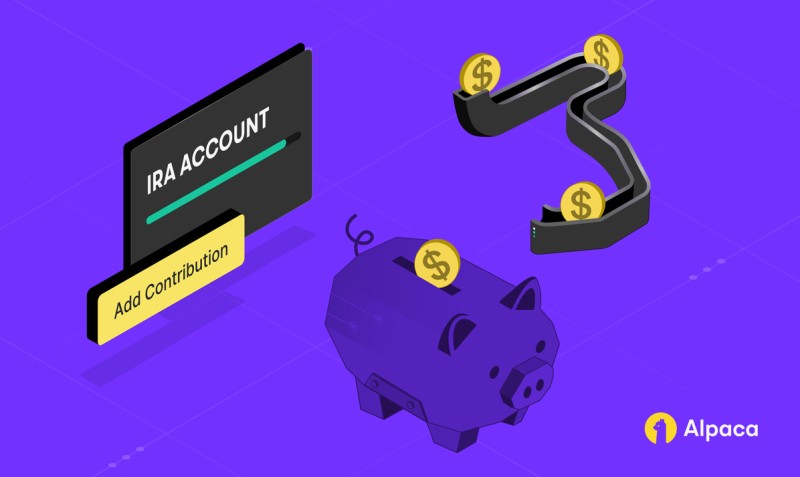
Alpaca offers API-driven Roth and Traditional IRAs for U.S. tax residents. Run algorithmic trades, auto rebalance, unified dashboard. Transfer via ACAT; ACH and wire coming. For coders who want control without phone calls.
Disclosures say algo trading carries risk, crypto not FDIC or SIPC protected, get pro advice. Neat for tech folks, not needed for a simple venture sleeve. Stick to manual if you're new. API path adds power, more ways to mess up if a script goes wrong.
Self-Directed IRA Providers Like Entrust
Entrust Group outlines a three-step process: visit crypto provider page, pick approved partner, set up account linked to SDIRA, purchase crypto via provider with SDIRA holding assets. They mention digital currency funds and IRA-LLC checkbook control. I like that they show a clear path.
Entrust steps
- Visit cryptocurrency provider page and select partner.
- Set up provider account and link to SDIRA.
- Purchase crypto directly through provider.
Mountain West IRA says modern SDIRAs no longer need an LLC to buy crypto; direct purchases allowed if IRA executes trade. Simplifies things a lot. Earlier you formed an LLC, now skip that cost. Less paperwork in retirement investing - welcome.
Tax Efficiency Comparison
A Roth IRA allows $10,000 to grow to $100,000 tax-free. Same growth in Traditional IRA gets taxed on withdrawal - maybe $35,000+ tax bill depending on rate. That's why roth ira crypto accounts shine for high growth bets. Math is simple but powerful.
A Roth IRA allows $10,000 to potentially grow to $100,000 tax-free, whereas the same growth in a Traditional IRA would be taxed upon withdrawal.
I ran that math, blew my mind. The tax-free part is the whole game. Believe crypto can multiply, the Roth shell locks in the win. Traditional makes you share with IRS later. I know which I prefer.
Regulatory and Compliance Points
IRA rules are enforced. Prohibited transactions - personal use of crypto or self-dealing - trigger taxes and penalties. UBIT may apply to certain crypto activities; UDFI affects leveraged positions. Custodians send 1099-R and Form 5498. Never touch the coins personally - golden rule.
Compliance checklist
- IRA Rules Enforced – avoid prohibited transactions.
- UBIT & UDFI – watch unrelated business income tax.
- Reporting – custodians provide 1099-R and Form 5498.
Get a CPA or advisor for cross-border elections and UBIT. Don't guess with IRS stuff. The source reminds us this is educational, not tax advice - I second that. Your situation may differ, pay for an hour of pro time if unsure.


Comments on “Roth IRA Crypto Accounts: Your Tax-Free Retirement Moonshot”
No comments yet. Be the first to share your thoughts.