
What Is a Smart Contract in Crypto and How It Works: The Self-Executing Code Eating Finance

What Is a Smart Contract in Crypto
Let’s talk about what is a smart contract in crypto in plain English. It’s code that runs on a blockchain, executing exactly what was written when certain conditions are met. No human required to step in. This is crypto, explained simply because it shows value moving without a bank. A what a cryptocurrency is is just a token living on this code.
Think of it like a vending machine. Drop a coin, pick a drink, the machine delivers. No attendant behind the glass. A smart contract does the same with data and money. Once deployed on-chain, the code is immutable. That’s clarity and safety by design. The source calls it self-executing code with if-then triggers. That’s the whole ballgame.
Think of a smart contract like a vending machine. You put in a coin, choose a drink, and the machine automatically gives you what you selected. No human in between.

The point of what is smart contract in crypto is simple: it cuts out the middleman. Lawyers, brokers, banks - surplus to requirements for the basics. The code enforces the deal. That’s a seismic shift for finance and beyond. The source notes these digital agreements enable secure, efficient, transparent transactions across finance, supply chain, healthcare, and decentralized apps. Wide net, indeed.
Cointelegraph's Six-Minute Smart Contract Primer
How Smart Contracts Run on the Chain
When builders do blockchain software development , they write rules in a language like Solidity. Ship the code to the network. Thousands of computers validate it. Pass? It’s inscribed in a block. From there, it runs autonomously. The contract executes specified actions when required conditions are met.
The contract waits for input. Match the “if,” trigger the “then.” Send tokens, the code recognizes it, spits back a different token. Every step recorded on a shared ledger. Nobody quietly rewrites history. Submit a transaction, network verifies the smart contract, appends to a block. Post-deploy, it’s immutable. Tamper-proof, full stop.
Why Folks Like Them
- Automation: the code acts with no human hand.
- Accuracy: less room for human mistake.
- Lower costs: the rent-seekers are gone.
- Transparency: all can view the steps.
- Trust minimisation: you trust the code, not a firm.
That list is the core pitch. The cost point is the big one. Strip out rent-seekers, and small deals become viable. The source notes blockchains handle smart contracts by validating and storing every transaction in an unalterable shared ledger. Accountability for all. Hard to argue.
Another point: code is deterministic - ambiguity dies. Traditional contracts are fuzzy. Smart contracts run identical every time. A relief for anyone who’s bankrolled a legal fight over fine print.
Smart Contracts vs Old Paper Contracts
Old contracts need lawyers and courts - time and money. Smart contracts? Execute the instant conditions are met. No waiting, no debate. Traditional contracts are enforced manually, often via banks and other intermediaries. That spikes costs and invites human error.
Smart contract outcomes are predetermined and nearly incorruptible, though a poorly written contract may not behave as intended.
But don’t miss this: a bug in the code is a permanent bug. Immutable means not easily fixed. Writing it well is non-negotiable. The source warns a poorly written contract may not behave as intended and can’t be easily patched. That’s the trade for firing the middleman.
Real World Use Cases
You might ask what is a defi app . It’s a decentralized app using these contracts to do finance. No bank teller, just code and users. Swap, stake, lend. The source lists DeFi platforms for swapping, staking, and liquidity provision as a top use case.
Places They Show Up
- Decentralized apps for swapping and NFT markets.
- Supply chain tracks orders and payments.
- Healthcare keeps patient records auditable.
- Financial services for claims and cross-border pay.
- Stablecoins that hold a steady value.
The source shows stablecoins like XUSD, XSGD, and XIDR are built on this tech. Code mints and burns tokens to hold the peg to dollars or other fiat. Other uses: blockchain games with asset ownership and play-to-earn. Not just finance; supply chain automation handles purchase orders and delivery terms.
Healthcare deploys the code for data privacy and cross-institutional access. Financial services streamline insurance claims and offer stablecoins with 24/7 liquidity. The reach is broad and expanding as devs pile in.
Stablecoins and the BEP Crypto Standard
Some stablecoins live on BNB Smart Chain. XUSD is one. It follows BEP-20, part of the bep crypto ecosystem. Talks to countless wallets and exchanges. Code handles mint, burn, check. XUSD also runs on Ethereum as ERC-20 - one coin, many chains.
A token pinned to the US dollar or Singapore dollar is genuinely cool. XSGD pegs to the Singapore dollar, XIDR to Indonesian rupiah. The contract ensures each token is backed. Swap fast. That’s self-executing code eating finance. StraitsX uses Solidity for interoperability across DeFi via ERC-20.
On Zilliqa, XSGD and XIDR use Scilla, with transactions around 40 seconds. Speed vs. safety, balanced. The source flags this as a real feature of those chains.
Simply Explained: Plain English Breakdown
Languages That Write the Code
Not all contracts speak the same language. Solidity is the lingua franca for Ethereum. There, ether cryptocurrency pays for compute. Scilla on Zilliqa prioritizes safety. Solana uses Rust or C++. Cardano uses proprietary languages distinct from Solidity.
Common Coding Tongues
- Solidity for Ethereum and BNB Smart Chain.
- Scilla for Zilliqa with formal checks.
- Rust or C++ for Solana programs.
- Cardano has its own proprietary languages.
Write in Solidity, your contract runs on any EVM chain. That’s a primary reason Ethereum scaled. Code travels. The EVM is distributed and deterministic - same input, same output across nodes. Reliability up.
Cloudflare’s docs note smart contracts can be written in several languages, some Turing-complete. Compiled bytecode runs on EVM. Immutability makes bugs dangerous; kill switches like SELFDESTRUCT were used post-DAO hack.
Smart Contract Blockchains
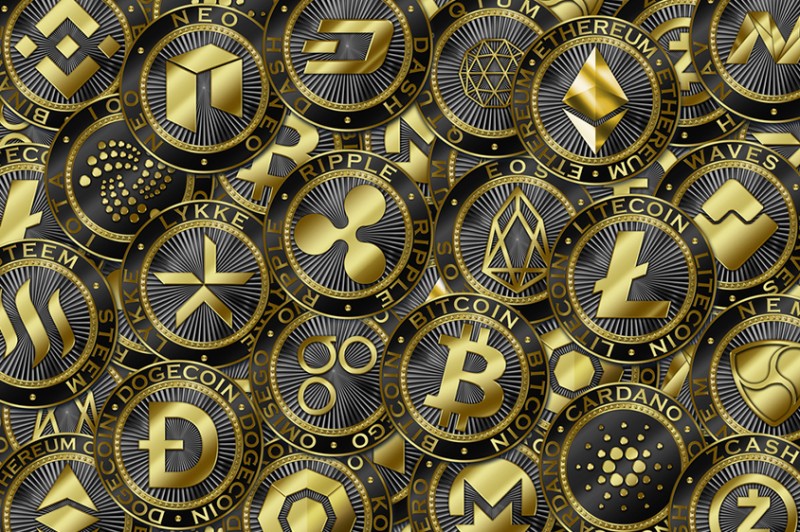
Ethereum pioneered this on-chain in 2015. Then others: BNB Chain, Cardano, Solana, Avalanche. Each chasing speed or safety. The source lists genesis blocks as historical fact - dates matter for context.
Leading Chains and Their Coins
- Ethereum with ETH, the largest dApp platform, genesis 2015.
- BNB Chain with BNB, EVM compatible and scalable, genesis 2019.
- Cardano with ADA, aims for sustainability, genesis 2017.
- Solana with SOL, high throughput, genesis 2020.
- Avalanche with AVAX, subnets for specific apps, genesis 2020.
Value locked in these chains is massive. Users stake to secure the network, earn yield. A user-owned economy, not a bank’s. Native assets act as medium of exchange, shift toward user ownership. Value derives from network demand.
Some bet on the tech via native coins. Not trivial. But prices swing hard. Only risk what you can lose. The source notes smart contract platforms outperformed Bitcoin since early 2021 with large drawdowns - historical, not a promise.
Scalability is the watch item. Layer-2s like ZK-rollups boost throughput. Security hinges on validator count and node access. Ethereum’s shift to Proof-of-Stake sharply cut energy use. Fact.
Protecting Your Crypto with Smart Wallets
A self-custodial smart wallet uses contract code for safety. Multi-sig, passkeys, social recovery. For what to know about cryptocurrency safety, these are key. The source calls them smart contract wallets enhancing security and automation.
Wallet Safety Features
- Multi-signature needs several approvals to send.
- Passkeys use biometrics, private key stays on device.
- Social recovery lets guardians help if you lose key.
- Behaviour checks limit daily spend and delay big moves.
I like social recovery. Lose your key, three friends vote you back in. Vitalik backed it. Makes self-custody less terrifying for normals. Multi-sig: share crypto with partner, separate seed phrases. One leak, funds safe.
Passkeys are auto-generated crypto or biometric keys. Private key stays on device; public key with provider. Two-step auth boosts privacy - private key never leaves device. Behaviour checks impose daily limits, whitelist addresses. Cuts damage from leaked creds.
Hybrid Cloud and Oracles
On-chain contracts sometimes need off-chain data. Enter oracles. The cryptocurrency software Chainlink fetches from Google Cloud, feeds the contract. Source describes Ethereum dApps requesting data from Chainlink, which pulls from a web service on Google App Engine and BigQuery.
The Chainlink-BigQuery integration reduces inefficiencies and adds new capabilities to Ethereum smart contracts, enabling new on-chain business models.
Use case: prediction market settled by real data from public crypto datasets. Or hedge high gas fees - contract pays if fees spike. Code talking to cloud. Submarine sends boost privacy; oracle expands to all historic chain data, killing bloat.
Chain plus cloud opens doors, adds slight delay. Worth it for new builds. Cloudflare runs an Ethereum gateway so any web device interacts without running a node. Speeds dApp building.
Whiteboard Crypto: Four Animated Use Cases
Identity and Lending Across Chains
Source cites a test with Citi, Wellington, DTCC Digital Assets on Avalanche Spruce subnet. Smart contracts issued identity credentials - proof you can hold a fund. Then token as collateral to borrow. Real PoC with private equity and money market funds.
Big for cross-chain deals. No re-doing paperwork. Code carries proof, cuts error and counterparty risk. This is where finance heads. Tested: tokenizing private fund with distribution rules, credential-based transfers, tokenized fund as collateral in automated lending.
Takeaway: smart contracts share identity across firms, kill counterparty risk, validate investor status by location. Lower capital needs, fewer errors. But legal standards need regulator work.
Steps to Get Stablecoins
Want to try these coins? Steps are clear. Sign up, verify, move money from bank, then swap or send. Flow from source for StraitsX:
How to Start with XUSD and Friends
- Sign up for a personal or business account.
- Verify your identity with documents.
- Transfer in from your bank to get the stablecoin.
- Make a non-custodial wallet with a partner.
- Transfer out to DeFi partners like Uniswap, DFX, Zilswap.
Big blocks? OTC desk for institutions, deep liquidity. Normals pool coins for yield. Low slippage. Swap to redeem USDC/USDT. Source notes buying XUSD, XSGD, XIDR includes pooling for attractive yields.
StraitsX supports minting, swapping, redeeming these with other stablecoins. A clean example of what is smart contract in crypto doing real work for everyday money moves.
How to Learn Blockchain Technology
If you wonder how to learn blockchain technology , start with docs. free courses on blockchain exist. Run a small contract on test net. Source points to platform dev docs as start.
The topic of crypto currency explained simply isn’t hard once you see code. A contract is if-this-then-that. Hard part is safety. Take time, read real examples. Cloudflare Ethereum gateway lets you query chain via RPC - hands-on.
Read ERC-20 and ERC-721. Define fungible and non-fungible tokens. CryptoKitties used ERC-721 for unique digital cats. Shows extensibility. Build a small token to learn.
Risks I Saw in the Source
Nothing’s perfect. Code has bugs. Bad code = breach. Law is thin; regulators may move. Source: blockchain tech relatively new, untested, little regulation.
Smart contracts are only as efficient and accurate based on the code written, can be prone to security breaches if not coded correctly.
Market risk: coins can drop 90%. Only risk what you can lose. Tech is young. Calm, careful. Source notes fraud if minority colludes, theft/inaccessibility of assets. Allocation strategy ≠ profit guarantee.
Operational challenges moving from legacy to digital. Privacy, compatibility with standards need eval. Smart contracts only as good as code - audit before trust.
Questions People Often Ask
Common Qs from source. One: can digital assets be hacked? Yes, but changing past blocks is very hard. Two: who controls? No single party, but some tokens centralized. Three: why many coins? Each serves purpose. Bitcoin scarce store of value. Ether needed for data settlement.
Four: how do blockchains work? Distributed databases, data linked in blocks. Crypto makes retro modification near impossible. Five: digital assets? Leverage blockchain and smart contracts to represent value/function. Six: regulation cuts complex; balanced rules could help.
Seven: how start? Regulated vehicles like ETFs give some protection; self-custodial wallets direct exposure, unique risks. Security essential. That’s the common asks.
Why This Matters to Me
I run this blog to make tech clear. The idea of what is smart contract in crypto hits home - it removes rent-seekers. Helps regular folks like you and me. Source calls it middleman’s worst nightmare. I get why.
You and I don’t need a fat fee to send money or prove a deal. Code does it. Not flawless, but direction is good. I’ll keep watching, writing plain words. Self-executing code eating finance is a slow chew, but worth understanding.


Comments on “What Is a Smart Contract in Crypto and How It Works: The Self-Executing Code Eating Finance”
No comments yet. Be the first to share your thoughts.